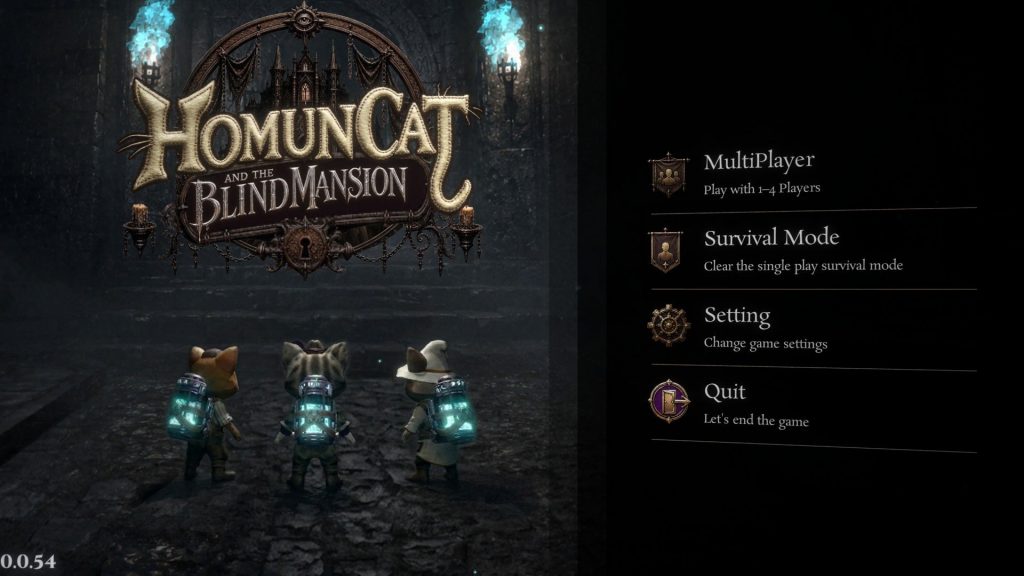
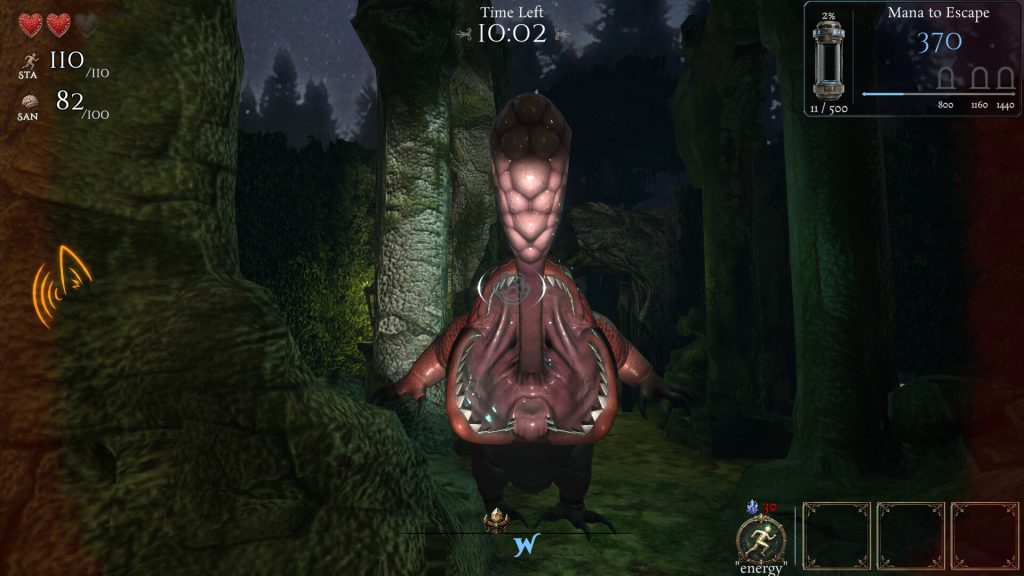
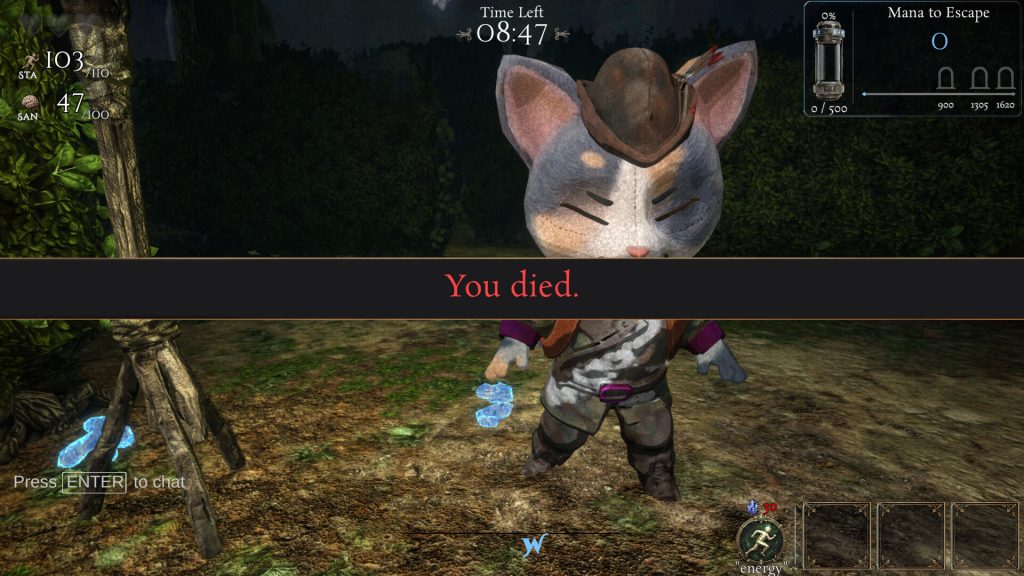
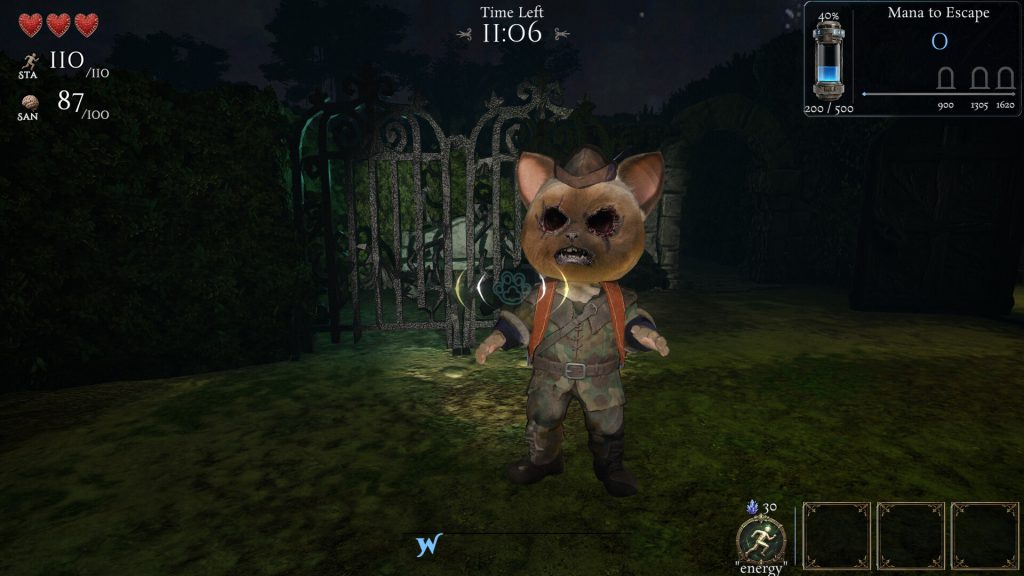
A sewn cat given life by a wizard’s touch is the only being capable of purifying the corrupted mana spreading through a mansion. It has no lines of dialogue — everything it communicates comes through eye movement, ear twitches, and physical gesture. When it takes damage, stuffing pokes through torn seams and threads visibly unravel, giving players a direct, physical readout of exactly how much danger their character is in.
TriCave’s HomunCat: and the Blind Mansion pair that specific, wordless character design against a co-op horror structure built entirely around one uncomfortable question repeated under time pressure: leave now for less, or wait for more and risk everything.
The Portal That Punishes Speed
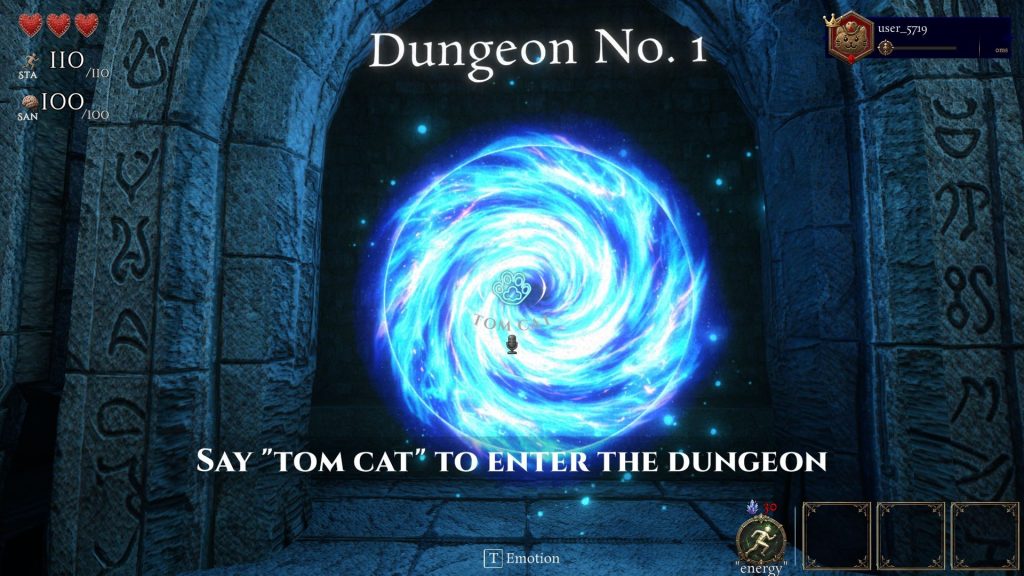
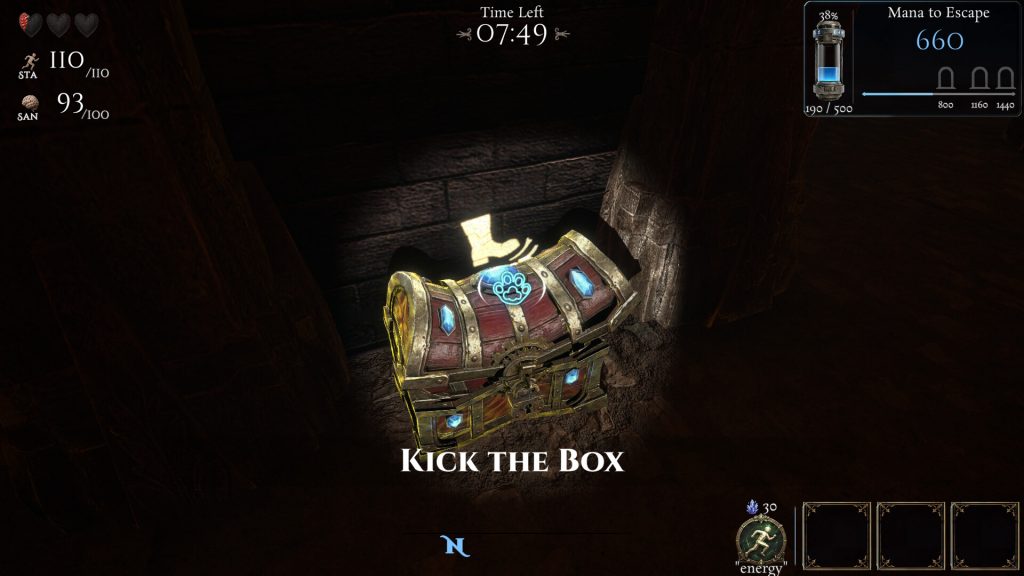
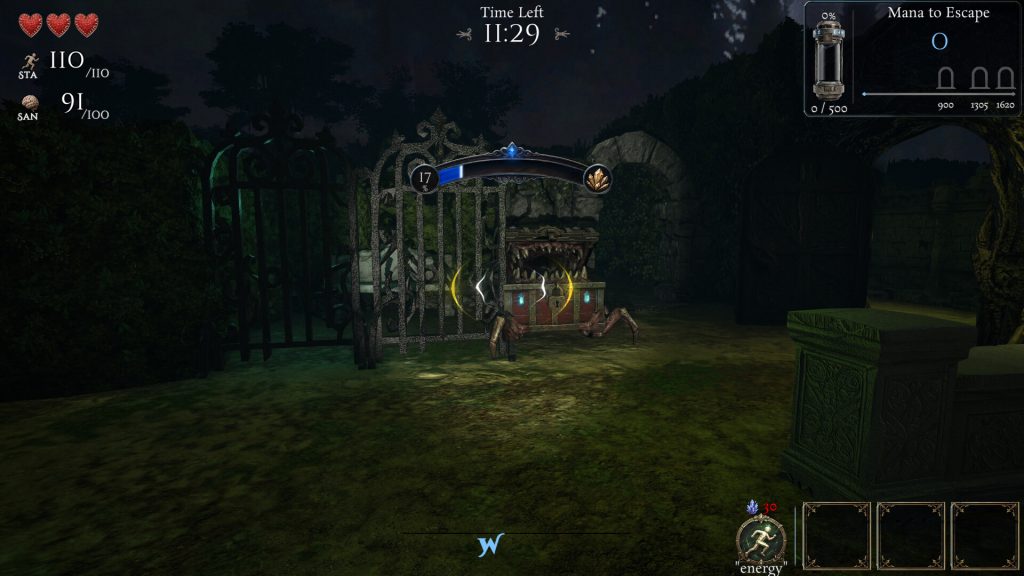
The central tension mechanic is straightforward to describe and genuinely difficult to sit inside. Players explore the mansion, destroying objects to collect mana; once the team’s combined mana gauge crosses a threshold, an escape portal spawns at a random location on the map. The first player to use it takes a 50% reward penalty. The second takes 25% off. The third player onward gets the full reward.
The moment any single player takes that portal, no new portal opens — meaning whoever hasn’t escaped yet is now facing the real possibility of being permanently trapped in a collapsing mansion because of someone else’s decision to leave early. Layered on top: the map itself deteriorates in real time as the clock runs, turning every “should we wait for one more portal cycle” decision into a live negotiation against both the environment and each other.
This is a meaningfully sharper edge than most co-op horror games put on their extraction mechanics. Games in this space typically make leaving early a purely individual risk-reward call; HomunCat makes it a decision with direct, immediate consequences for teammates who haven’t made their choice yet. Whether four friends handle that well or catastrophically is presumably exactly the content TriCave is building toward.
The Skill You Have to Shout
The other headline system is voice-recognition skill activation: rather than pressing a keybind, players speak a specific command phrase aloud to trigger their character’s special ability. The catch is structural rather than cosmetic — the act of speaking is itself in-game noise that attracts nearby monsters, so the more powerful the skill, the greater the risk incurred simply by voicing the command to use it.
TriCave has been explicit about why this system exists beyond the moment-to-moment gameplay: the studio is betting that real screams and desperate, panicked spell-shouting under genuine pressure will translate directly into streaming and content-clip value — a mechanic built as much for what it produces on camera as for what it does in-session. It’s a legitimate bet; voice-triggered mechanics under stress are precisely the kind of thing that generates the unscripted, embarrassing, shareable moments that co-op horror games live or die by in the current content ecosystem.
The Four Roles and the Sanity Clock
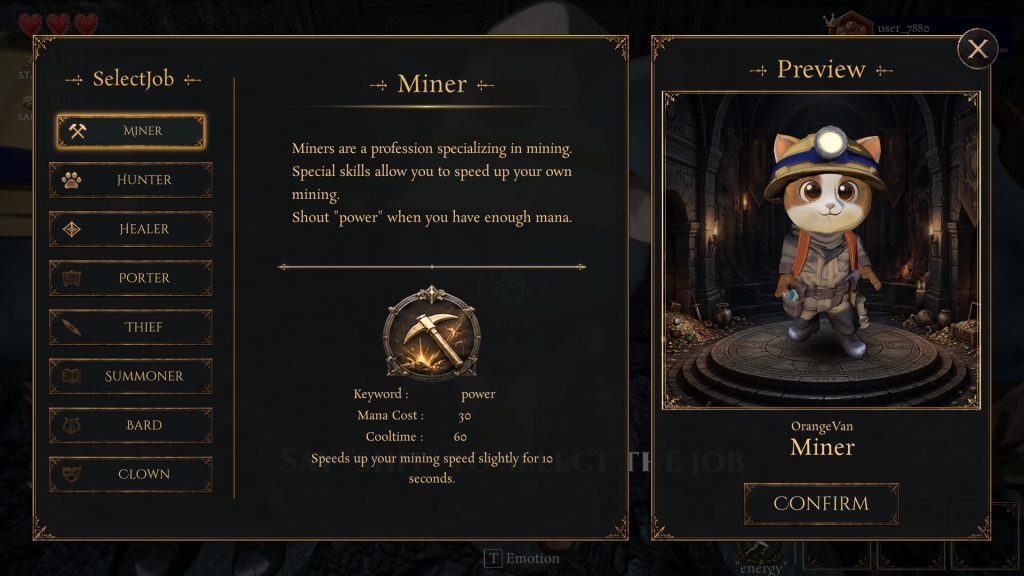
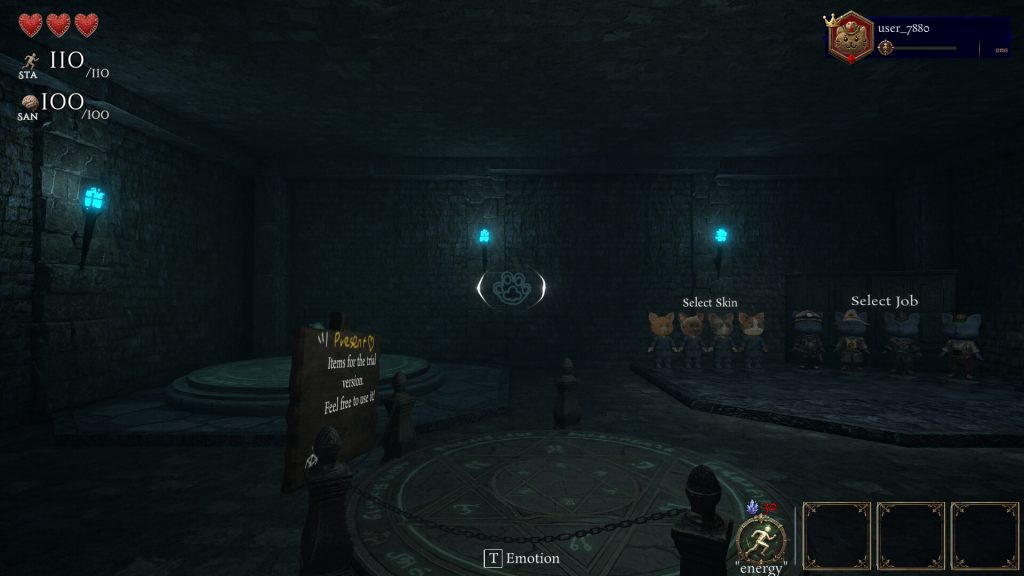
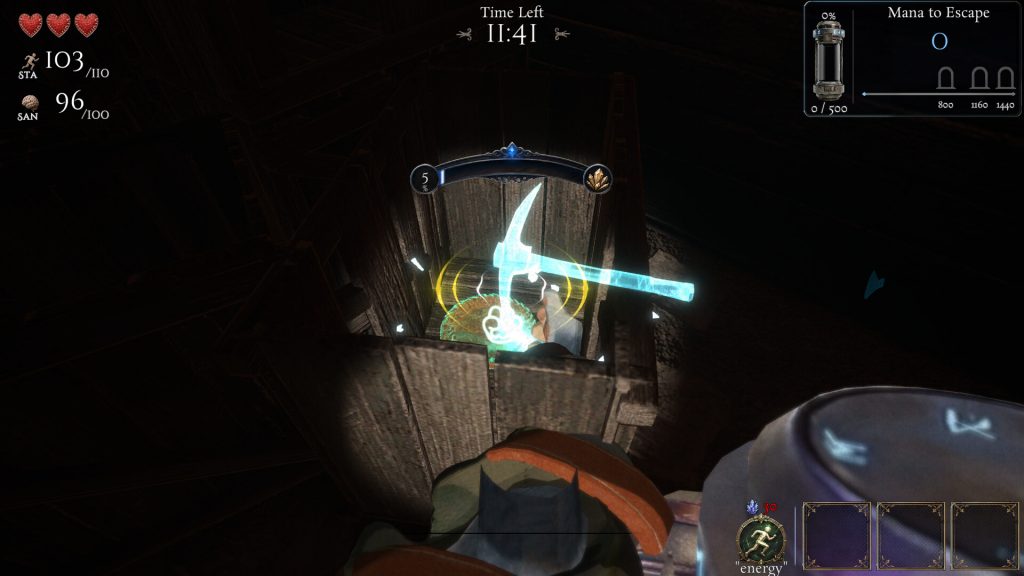
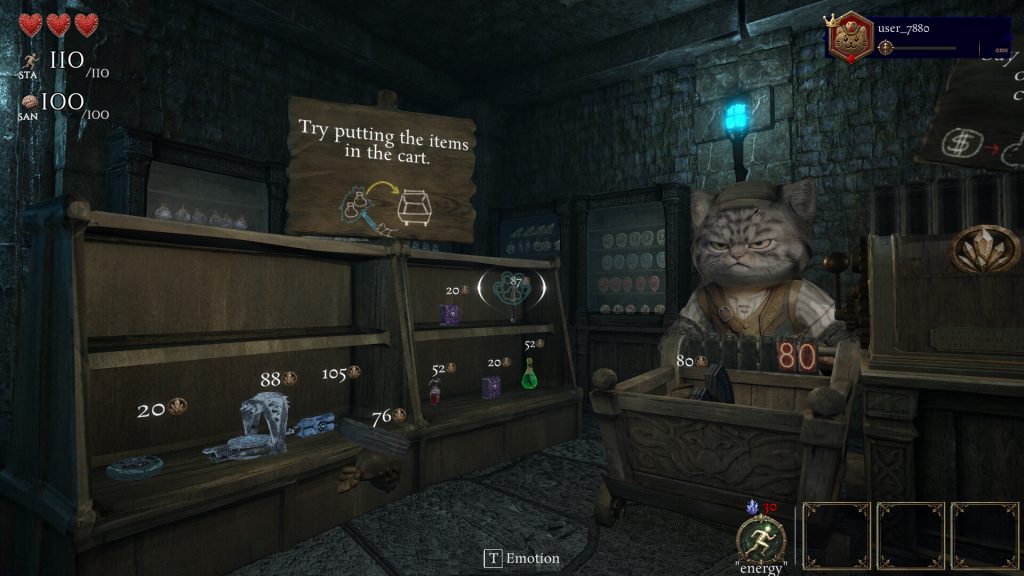
Character classes split into four support-oriented roles rather than combat archetypes: Miner (faster resource extraction), Healer (restores health and sanity), Hunter (faster stamina recovery), Porter (50% increased base carrying capacity). None of these are damage-dealing specializations — the entire class structure is built around resource management and survival logistics rather than combat power, which tracks with a game whose core loop is about extraction and escape rather than fighting.
The sanity system is the pressure valve tying prolonged monster exposure to compounding difficulty: the longer a player spends near a threat, the more their sanity drains, and once it bottoms out, hallucinations and loss of character control follow — mechanically escalating the horror-genre pressure rather than leaving it as pure atmosphere.
Who This Is For
Strong fit for: co-op horror fans who want genuine trust-and-betrayal stakes layered on top of standard extraction mechanics, not just cosmetic risk; content creators and streaming groups specifically drawn to voice-triggered mechanics that reliably produce clip-worthy chaos; players who appreciate wordless, physically expressive character design over dialogue-driven horror protagonists; Korean players who want native-language interface support at launch.
Cautious fit for: players without reliable microphone setups, for whom the signature mechanic may be a genuine barrier rather than a feature; anyone who needs confirmed voice acting or subtitle language breadth before committing; players who want a finished game or demo to evaluate rather than an early reveal.
Less ideal for: solo players (this is co-op-first by design); anyone who dislikes destruction-based exploration or extraction-style escape mechanics; players seeking combat-forward horror over resource-and-escape-forward horror.
The Takeaway
HomunCat: and the Blind Mansion takes a genuinely uncomfortable co-op design decision — leaving early costs you money, but leaving costs everyone still inside their exit — and pairs it with a voice-recognition skill system explicitly engineered to produce real screams under real pressure. The sewn-cat protagonist’s wordless, physically legible damage state and TriCave’s stated commitment to hand-made final art (AI used only for early concept work) round out a debut pitch with a clear, specific identity in an increasingly crowded co-op horror field.
The mana is being collected. The portal will open somewhere on the map. And the moment it does, every player in that mansion has to decide, immediately, whether their friends are worth waiting for.
Q4 2026. Steam page is live now.
Information regarding ‘HomunCat: and the Blind Mansion’
| item | detail |
|---|---|
| Developer | TriCave |
| Publisher | TriCave (Self-publishing) |
| Genre | Cooperative Horror, Action, Indie |
| platform | PC (Steam) |
| Release date | Scheduled for the fourth quarter of 2026 |
| language | Supports interfaces in 13 languages including Korean (Voice/subtitle support unconfirmed) |
| Reactions/Evaluations | Early stage of announcement, no official review yet |
| Steam Page | Shortcut |