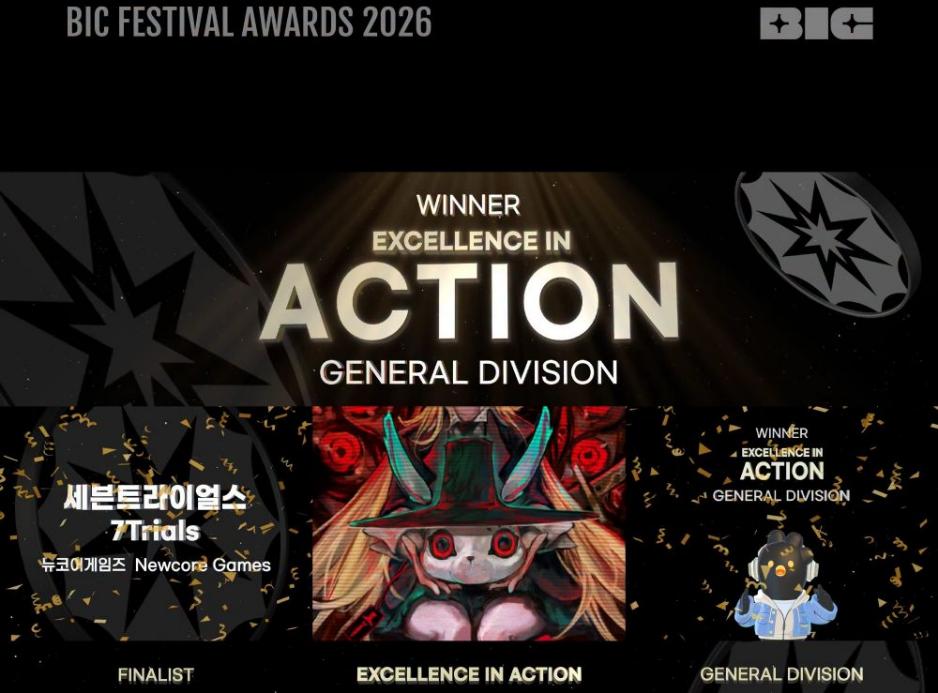
Seven Trials from Korean developer Newcore Games opens its first global Steam playtest on August 24 — seven days for players worldwide to experience what earned the game BIC 2026’s Excellence in Action award and a Top 10 finish at the Google Play IndieFest pitching finals, both covered in this week’s BIC reporting.
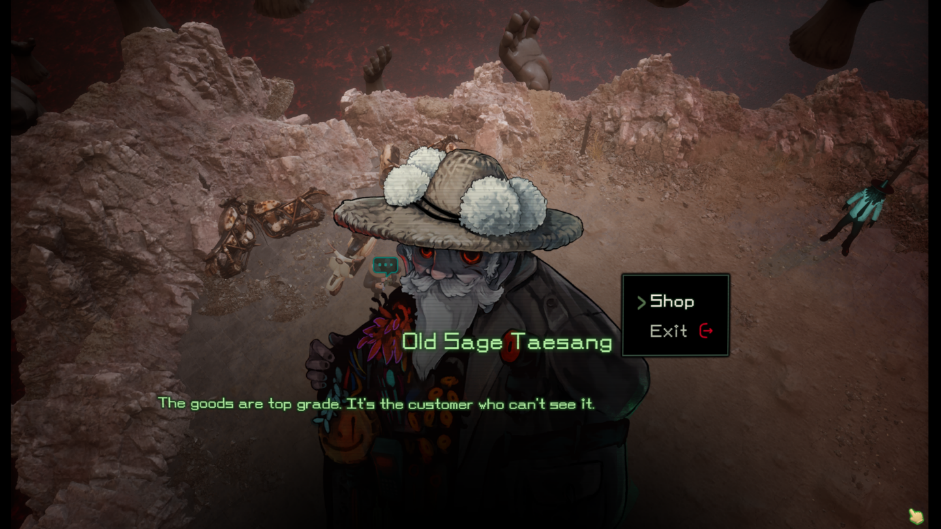
The game’s setting is the specific combination that makes it distinctive: a contemporary elite private academy (학원) that has been transformed into a grotesque afterlife realm, where protagonist Yeowoobi must survive 49 days of trial and judgment. The “49 days” framing draws directly from Korean Buddhist afterlife belief — the period traditionally understood as the time between death and the soul’s next destination — while the academy setting places this supernatural premise inside a space that Korean players recognize immediately from the particular anxieties of educational culture.
CEO Lee Man-jae: “This playtest is the first opportunity for players around the world to experience Seven Trials directly. We will present a more complete game based on the vivid feedback from players.”
The Three-Layer Skill System
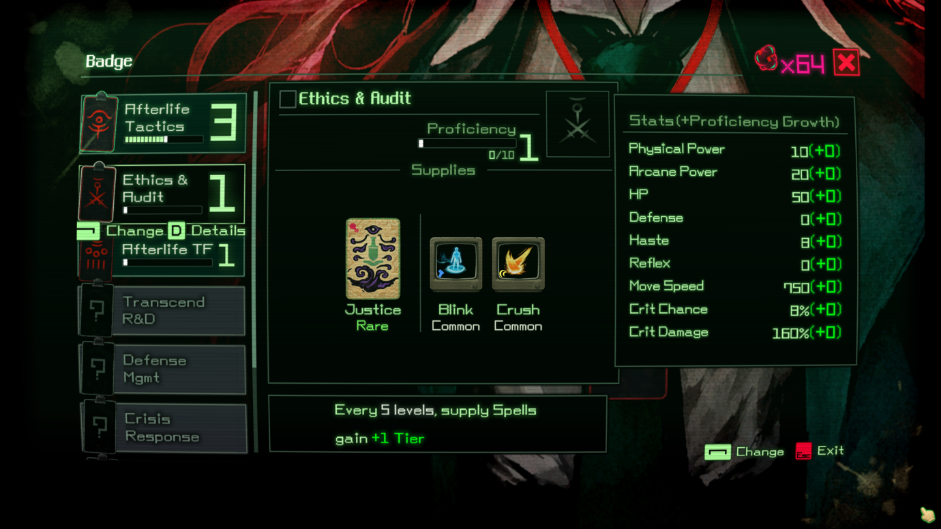
Sorcery, offerings, and fate cards as three simultaneous skill architecture layers is the build system that gives the hack-and-slash its strategic depth. In most hack-and-slash action games, the build is a single system — weapons, abilities, or equipment chosen from one pool. Three distinct layers that interact with each other create a combinatorial space where the choice in each layer affects the optimal choices in the others.
The roguelite structure means each run through the five chapters assembles a different combination of sorcery abilities, offering effects, and fate card modifiers — which is the run-to-run variety that sustains extended engagement with the premise.
The Urban Occult Setting
A modern school building where the institutional structures of Korean academic life — exams, rankings, teacher authority, peer competition — have been replaced by supernatural trials and judgment from entities operating under the logic of traditional Korean afterlife cosmology is a specifically Korean horror setting that has no direct Western equivalent. The “familiar space, uncanny wrongness” horror approach (covered this month in Shift at Midnight and Huntin’ Buddies) is here applied to the specific anxieties of the Korean educational context.
The urban occult genre label positions Seven Trials in the tradition of horror that works through contamination of familiar contemporary urban spaces by supernatural forces — the school is recognizable, the rules governing it have changed.
The Playtest Scope
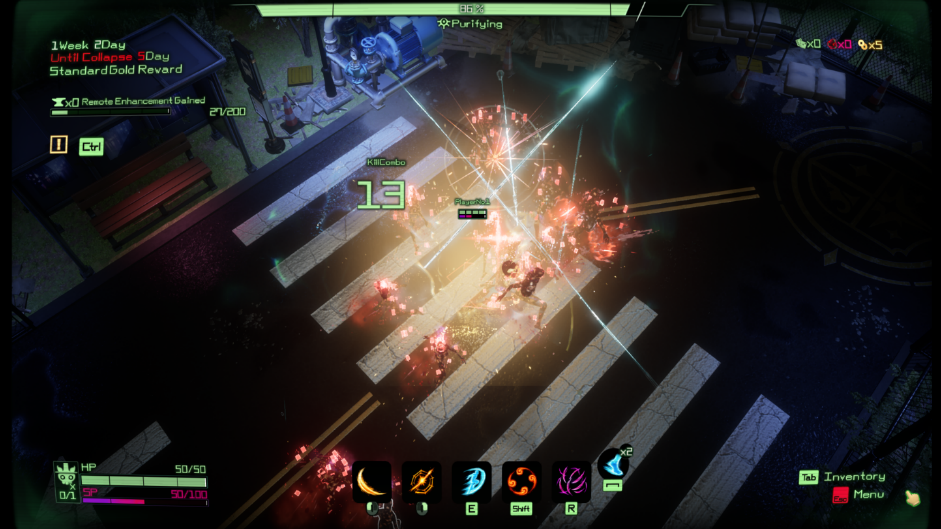
Five chapters and five boss fights represent substantial playtest content — enough to evaluate whether the three-layer skill system produces the build diversity it implies, whether the boss fights express the action excellence BIC’s jury recognized, and whether the four-player co-op is genuinely integrated into the design or supplementary to it. A week of access ending August 31 provides both casual play and more intensive build experimentation.
Sign up via the Seven Trials Steam page. Playtest runs August 24–31.