Joe Fender started building Sunset Summit in 2021 to escape the horror genre after DEVOUR. In 2023 he burned out and lost confidence that a first-person co-op climbing game could find an audience. Then PEAK launched, became a phenomenon, and Fender had his answer. He finished the game.
This is the development story behind Sunset Summit — a game that needed external market validation to confirm that what the developer personally wanted to make was something players actually wanted to play. The co-op climbing genre’s recent commercial success didn’t give Fender the idea; it gave him the courage to complete an idea he’d had years before.
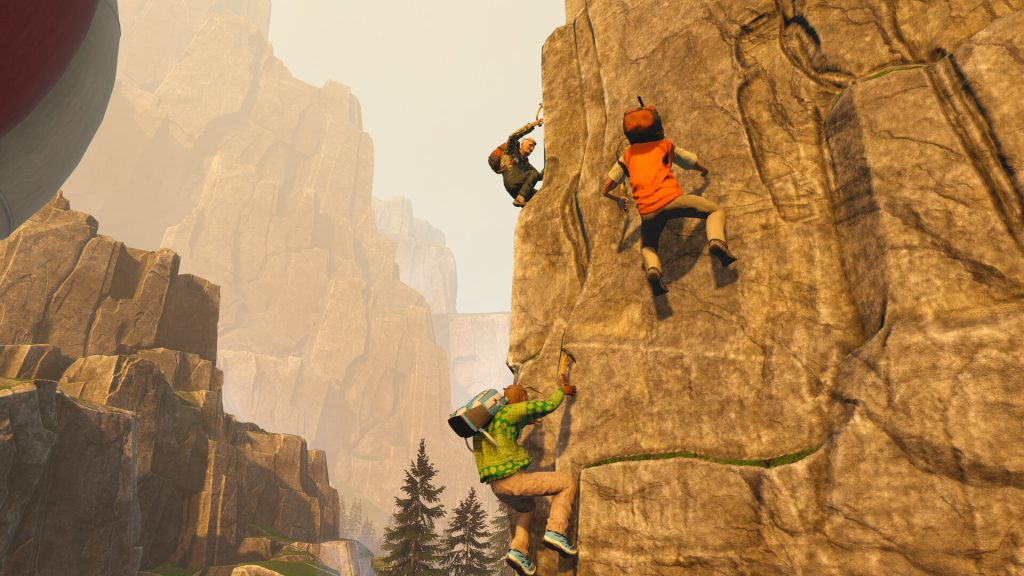
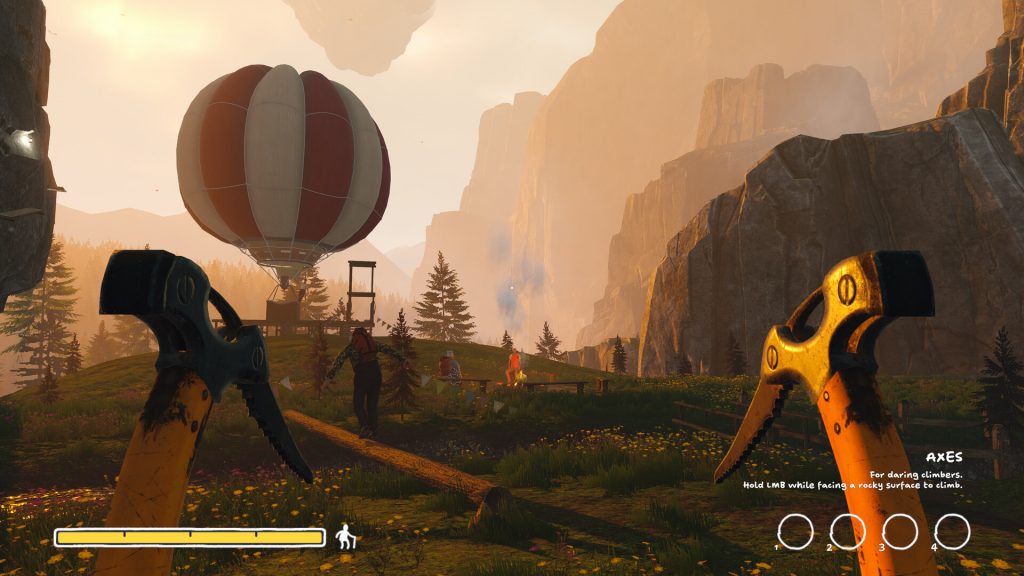
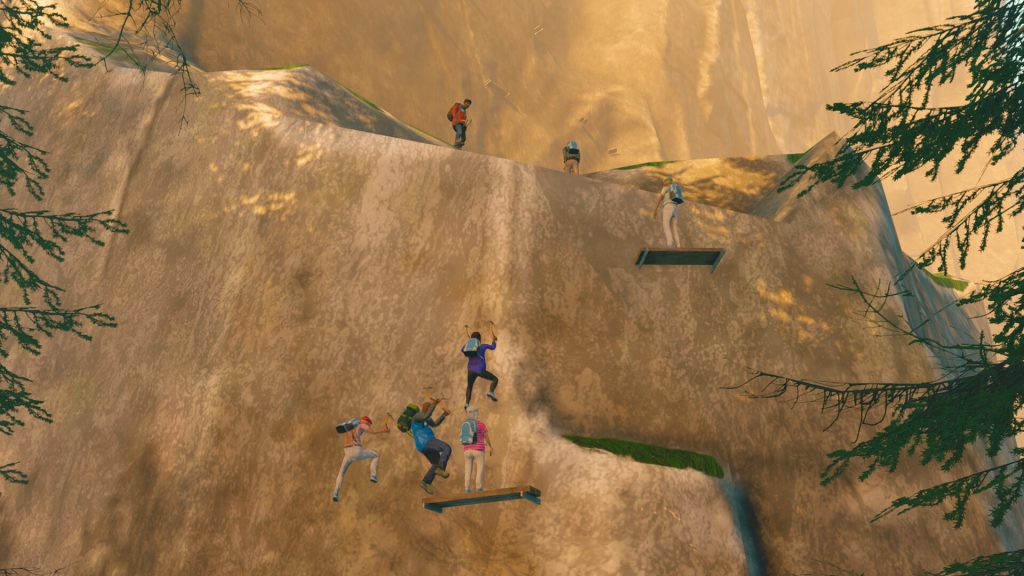
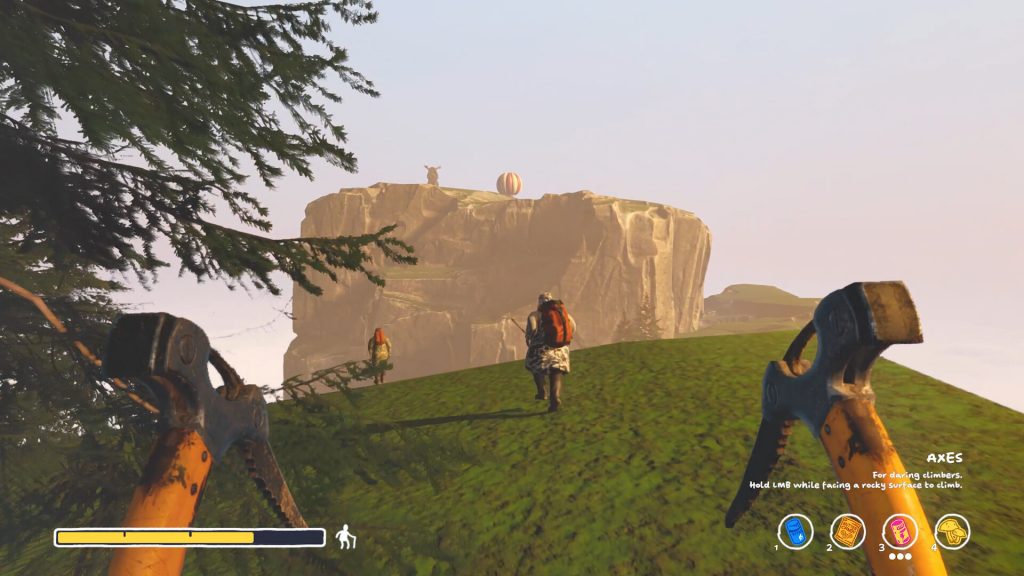
Sunset Summit launches August 21 through Future Friends Games (the publisher behind games like Terra Nil, Bear and Breakfast, and Beacon Pines), with up to 8 players climbing ancient peaks through sunset-lit floating islands using pickaxes, ropes, pogo sticks, item delivery drones, and canned goods. The demo covering the first map, “Elder Crag” is currently available.
The DEVOUR Credential
7 million copies of a co-op horror game is a specific commercial achievement that establishes what the Fender brothers know how to build: multiplayer experiences that generate the kind of sessions players want to tell other people about. DEVOUR‘s commercial trajectory — starting small and building over years through word-of-mouth and streaming visibility — is the model that Sunset Summit presumably hopes to follow with a different genre’s audience.
The genre shift from horror to co-op climbing adventure is total rather than gradual. Sunset Summit doesn’t appear to have horror elements; the aesthetic is explicitly warm, the tone is playful, and the tension comes from fall risk rather than supernatural threat. The core competency transferring from DEVOUR is multiplayer session design — understanding how to create situations that make groups of players create memorable moments together — applied to an entirely different emotional register.
The Equipment Absurdism
Pickaxes, ropes, and harnesses would make Sunset Summit a technically grounded climbing game. The addition of pogo sticks, booster pills, item delivery drones, and canned goods as legitimate climbing equipment moves it into a different register: climbing as creative problem-solving and comedy rather than simulation of actual mountaineering.
This tonal choice is consistent with the PEAK comparison that international coverage has made. That game’s appeal was substantially about the absurdism of using cooking and crafting mechanics to address climbing challenges — the emergent comedy of improbable solutions succeeding unexpectedly. Sunset Summit appears to be building the same tonal space through a different equipment vocabulary: the friend who figures out that a pogo stick clears a gap that the pickaxe couldn’t, or the team that organizes a drone supply chain to get booster pills to someone who’s stuck.
The proximity voice chat and walkie-talkie communication systems are the social infrastructure that makes these moments into stories. Communication about absurd solutions — explaining how the canned goods fit into the plan, coordinating the drone deployment, warning someone that the pogo approach has a specific failure mode — is where co-op climbing games generate the content that players remember.
The Multiple Routes and Checkpoint Design
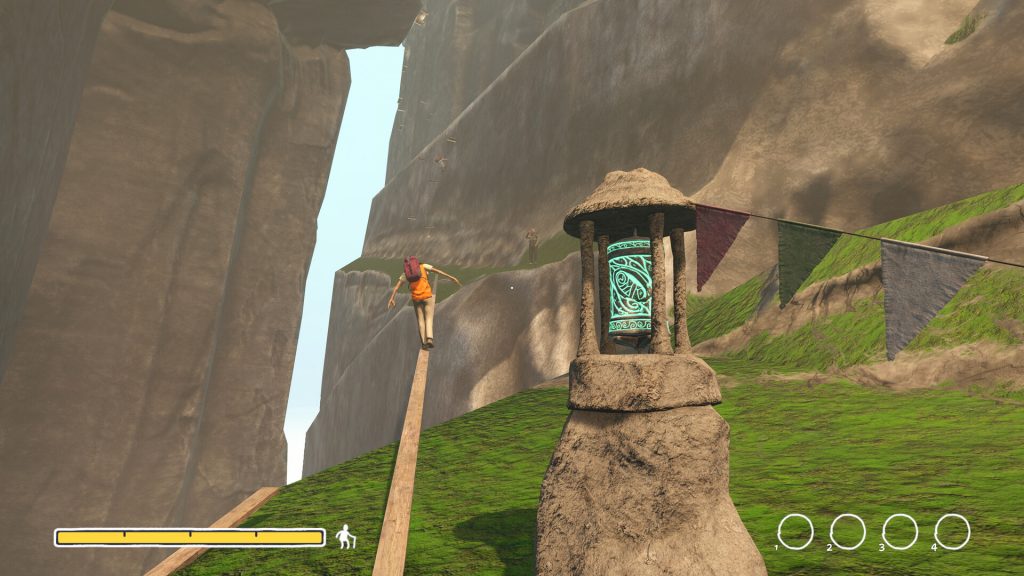
Handcrafted multiple routes per mountain create the exploration dimension that distinguishes Sunset Summit from point-to-point climbing challenges. Different paths up the same peak create both initial discovery (where are the viable routes?) and repeated play variety (we went left last time, let’s try right). When eight players can spread across different routes and reconverge, the group dynamics become genuinely varied rather than a single-file progression problem.
The checkpoint system — immediate respawn at the most recent checkpoint after a fall — is the design decision that determines the game’s tone more than any other. Climbing games without checkpoints create permadeath anxiety; Getting Over It‘s appeal is specifically the stakes of losing everything from a single error. Sunset Summit is explicitly not that game. Falls are recoverable; progress isn’t lost; the tension is about completing before sunset rather than about the catastrophic consequence of mistakes.
This makes Sunset Summit accessible to players who specifically don’t want the punishing stakes of checkpoint-free climbing games. The “PEAK vibes” comparison that keeps appearing in coverage positions it as the friendly co-op climbing option rather than the masochist variant. Joe Fender describing “cooperative games and climbing and giant structures” as his favorite elements is consistent with a game optimized for shared enjoyment over individual challenge.
The Sunset Visual Identity
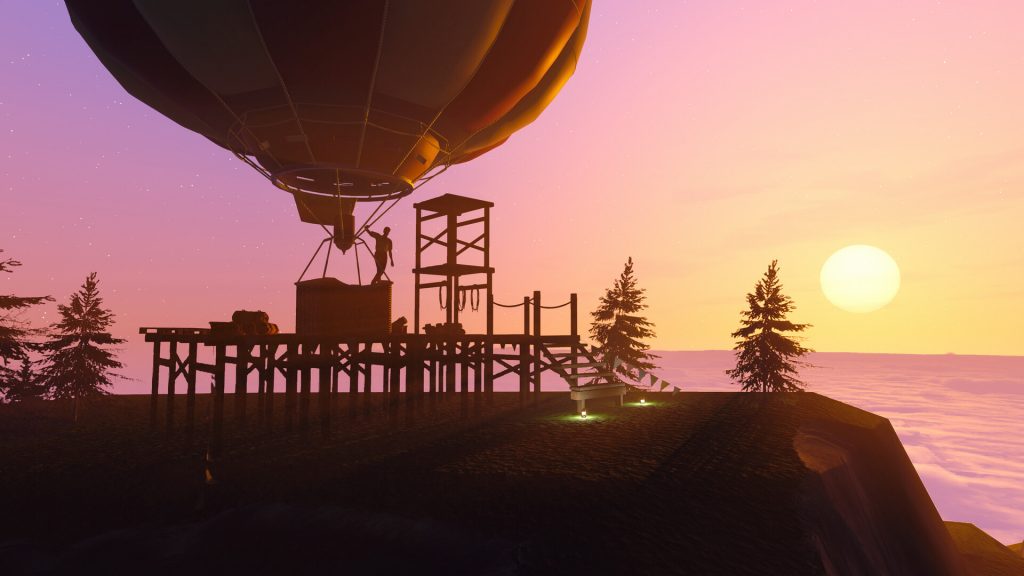
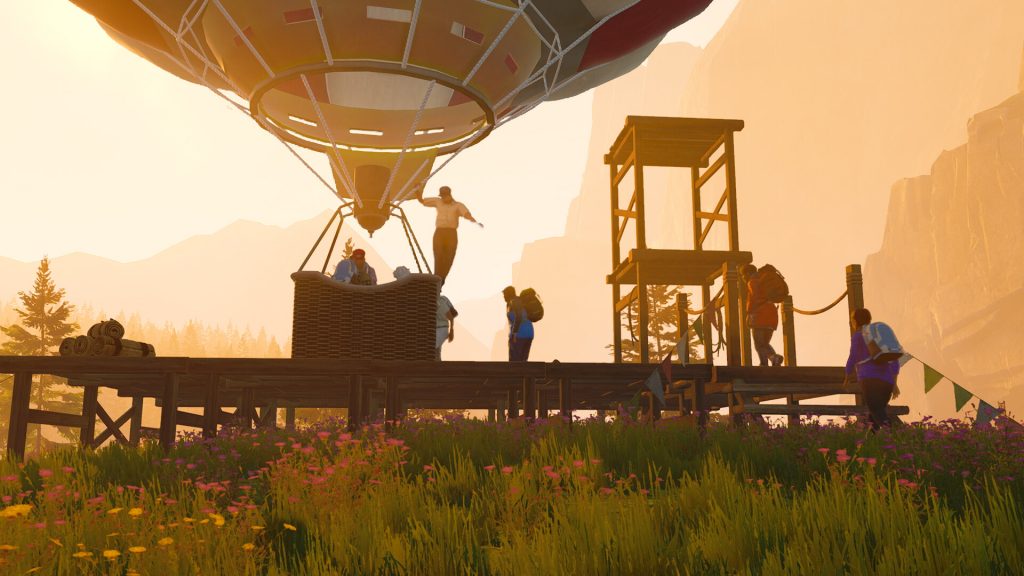
The sunset-lit floating island aesthetic isn’t arbitrary — the game is called Sunset Summit, and the visual design that the title implies (warm golden light, the specific colors of sky and cloud at the day’s end, the sense of a deadline built into the atmosphere) is doing thematic work. You need to reach the top before the sun goes down; the sky’s color is always telling you how much time remains.
This creates a natural integration between the visual design and the time pressure mechanic that more neutral or dark settings wouldn’t provide. The beauty of the sunset is also the evidence of your deadline. Players who stop to look at the sky are both enjoying the game’s art and processing information about their urgency.
The in-game camera that lets players photograph moments from the climb is consistent with this visual identity. A game that is explicitly beautiful enough that players want to capture specific moments from it is a game with a defined aesthetic identity rather than a neutral game environment.
The Future Friends Games Context
Future Friends Games has published games with genuine design ambition and specific aesthetic identities — Terra Nil‘s reverse city builder about ecological restoration, Bear and Breakfast‘s gentle management game with narrative depth, Beacon Pines‘s storybook adventure — suggesting a publisher that specifically selects games with clear creative visions rather than genre convention executions. Sunset Summit‘s combination of DEVOUR commercial credentials with a completely different genre aspiration is a plausible Future Friends selection.
Who This Is For
Strong fit for: PEAK players who want more co-op climbing options; DEVOUR fans who want to see what the Fender brothers build outside horror; friend groups of up to 8 looking for a climbing-and-comedy co-op experience; players who specifically want checkpoint-supported climbing (not permadeath); streaming content creators whose audiences enjoy watching co-op chaos with climbing-specific stakes; players who found pure survival climbing games too punishing and want the genre’s appeal with a friendlier failure state.
Cautious fit for: players who specifically want the high-stakes tension of checkpoint-free climbing challenges; anyone who needs higher demo review counts before evaluating; players who found PEAK‘s design satisfying and are uncertain whether Sunset Summit adds meaningfully different content.
Less ideal for: solo players who want single-player depth rather than co-op scaling; players who dislike climbing/platformer mechanics regardless of social context; anyone wanting competitive rather than cooperative multiplayer.
What to Watch For
The August 21 launch will reveal how the full game’s mountain variety across the floating island geography expands on the demo’s Elder Crag map. A co-op climbing game’s longevity depends on how many distinct mountain personalities the game delivers — how different routes and challenges feel across maps rather than within a single well-designed one.
The 8-player maximum is ambitious for a climbing co-op game. Most co-op climbing games work at 2-4 players because larger groups create coordination chaos that becomes frustrating rather than funny. Whether Sunset Summit‘s design scales well to 8 players — whether coordination remains achievable and emergent moments remain comedic rather than chaotic at full capacity — will be one of the specific launch evaluations.
The Takeaway
Sunset Summit is Joe and Andrew Fender making the game they specifically wanted to make — the one that combines the elements Joe loves (co-op games, climbing, giant structures) in the register he wanted to explore (warm, beautiful, funny rather than scary) — after years of development and a burnout that nearly ended the project, completed after watching PEAK‘s success confirm that the audience existed.
The 7-million-copy DEVOUR commercial foundation establishes that the Fender brothers understand how to build multiplayer sessions that create memorable moments. Sunset Summit is testing whether that understanding transfers to a completely different tone, genre, and aesthetic.
Future Friends Games is the right publisher for a game with this specific creative identity. August 21 is when the mountain opens for eight players at a time.
The pogo stick solution is probably not the intended route. The drone supply chain is definitely someone’s idea. The sun is moving, and the peak is still up there.
August 21. Eight players. One summit.
Information regarding the ‘Sunset Summit’
| item | detail |
|---|---|
| Developer | Joe Fender, Andrew Fender |
| Publisher | Future Friends Games |
| Genre | Cooperative Climbing / Adventure |
| Release platform | PC (Steam) |
| Official release date | August 21, 2026 |
| Maximum number of people | Online co-op for up to 8 players (offline solo play supported) |
| Developers’ previous work | DEVOUR (Cumulative sales of 7 million copies) |
| Steam Review (Demo) | Positive (83%, 48 cases) / Last 30 days mostly positive (76%, 25 cases) |
| Steam Page | Shortcut |
| Demo Page | Shortcut |