An industrial city on the frontier of an empire. An inquisition headquarters you’re responsible for running. A quota of prisoners to fill. Monsters outside the walls. Heretics within them. Madness spreading through the population at a rate that correlates directly with how many extreme decisions you’ve had to make to keep everything from collapsing.
Dark Rail from Spanish solo developer Steam Veil Games (published by Barcelona-based JanduSoft, whose prior collaboration with Carlos Azuaga produced Yellowcreek Stories: The Cabin Watcher, covered earlier this month) presents a dark management roguelite where the player runs an inquisition — not as a hero working to reform it, but as the person responsible for making it function under impossible resource constraints, while the empire’s demands remain non-negotiable.
The Steam Train Fest demo available from July 20 is the game’s first public release, targeting a Q4 2026 launch across PC, Nintendo Switch, and Xbox Series X.
The Inquisition as Management System
The specific historical and fictional resonance of running an inquisition is doing more than providing dark aesthetic texture. An inquisition is a bureaucratic institution with explicit goals (identify and eliminate heresy), operational constraints (limited interrogators, limited resources, territorial jurisdiction), external accountability (quota demands from the empire), and internal tensions (the human cost of its methods affecting the people who operate it). This is a management game premise whose subject matter is inherently about institutional moral corruption — not as an external theme applied to otherwise neutral systems, but as the intrinsic quality of the institution being simulated.
The “maintain empire” objective versus the “preserve humanity” undercurrent is built into the premise before any game design is added. The player who fills their prisoner quota efficiently is doing their institutional job correctly; the player who compromises on quota to reduce the human toll is failing their operational metrics. The roguelite structure — runs that fail when the city collapses, madness spreads beyond control, or rebellion overwhelms defenses — means the game evaluates performance on institutional metrics, not moral ones.
Steam Veil Games founder Carlos described this explicitly: “Dark Rail is about the pressure players feel, the consequences of choices, and the nature of power.” The design intention is to make players experience the institutional pressure that produces extreme decisions — to understand power’s corrupting logic from inside it rather than observing it from outside.
This is the thematic territory that games like This War of Mine, Papers, Please, and Frostpunk have explored from different angles. The player as institutional actor rather than heroic individual, optimizing against metrics that produce human cost — what makes Dark Rail‘s version specific is the historical resonance of the inquisition and the steampunk industrial setting that frames it as a machinery of empire rather than a personal moral failure.
The Train Expedition Mechanic
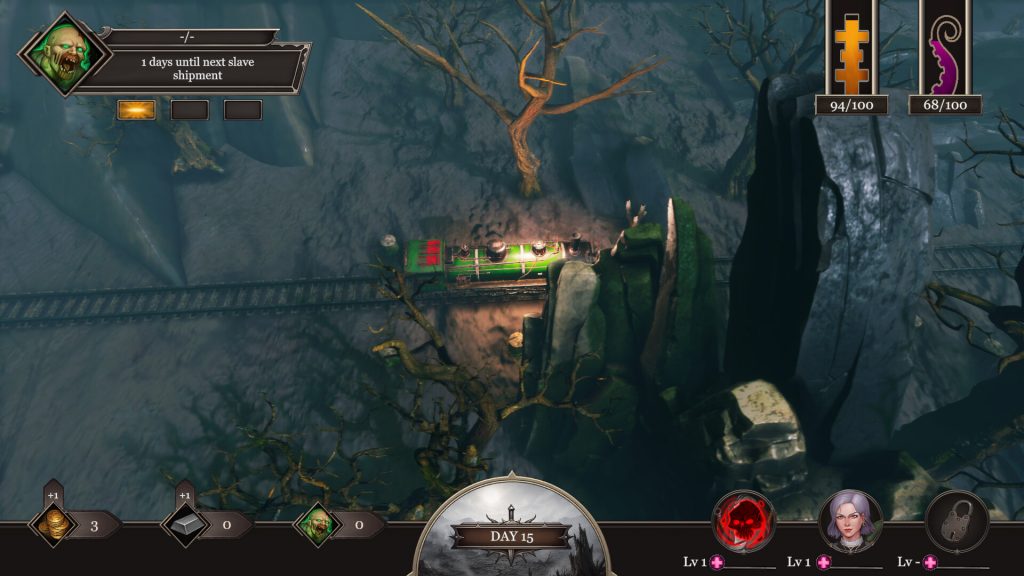
The train expeditions — dispatching inquisitors into the dangerous territory beyond the city to pursue heretics and confront monsters — are the operational extension of the management core. The city is the hub; the trains are the arms reaching into the threatening periphery.
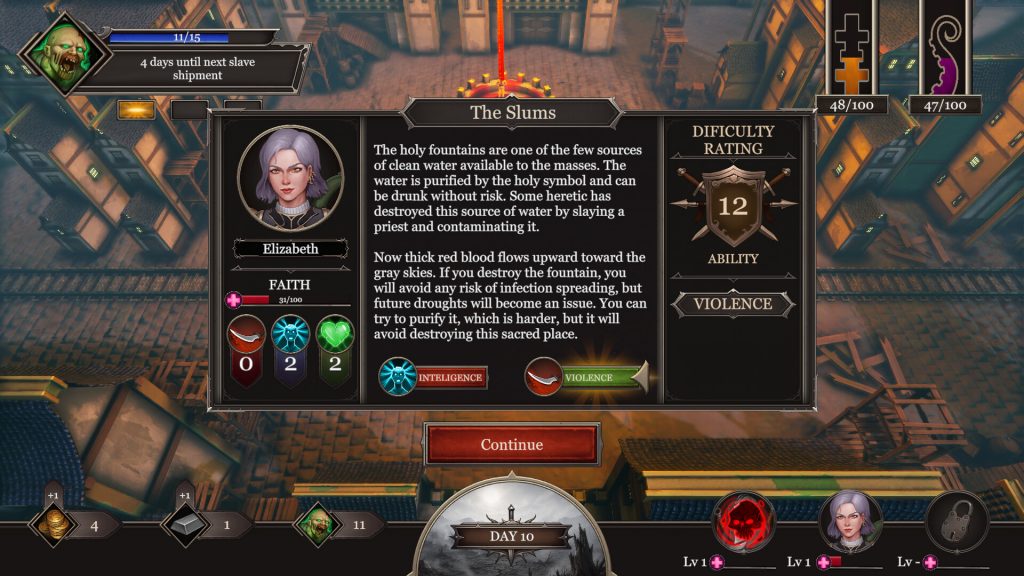
This creates a dual management structure: the city itself (resource production, rebellion control, madness management, headquarters expansion) and the expeditions (inquisitor deployment, mission selection, risk management). A city with strong internal stability but inadequate expedition capability fails against external threats; a city with aggressive expedition capacity but neglected internal management collapses from within.
The train setting specifically connects to the steampunk aesthetic while providing the logistical and risk management structure that roguelite games need for their run-to-run variation. Different expedition routes, different encounter compositions, different resource rewards and threats — the trains are the roguelite’s procedural content layer, while the city management is the persistent structure that shapes each run’s starting conditions.
The JanduSoft publishing connection establishes the Spanish indie gaming context. JanduSoft’s catalog of darker, more unusual indie games — Yellowcreek Stories: The Cabin Watcher being the most recent in this coverage — suggests a publisher specifically interested in games that push against comfortable genre conventions. Dark Rail‘s inquisition management premise fits this pattern precisely.
The Steampunk Inquisition Visual Language
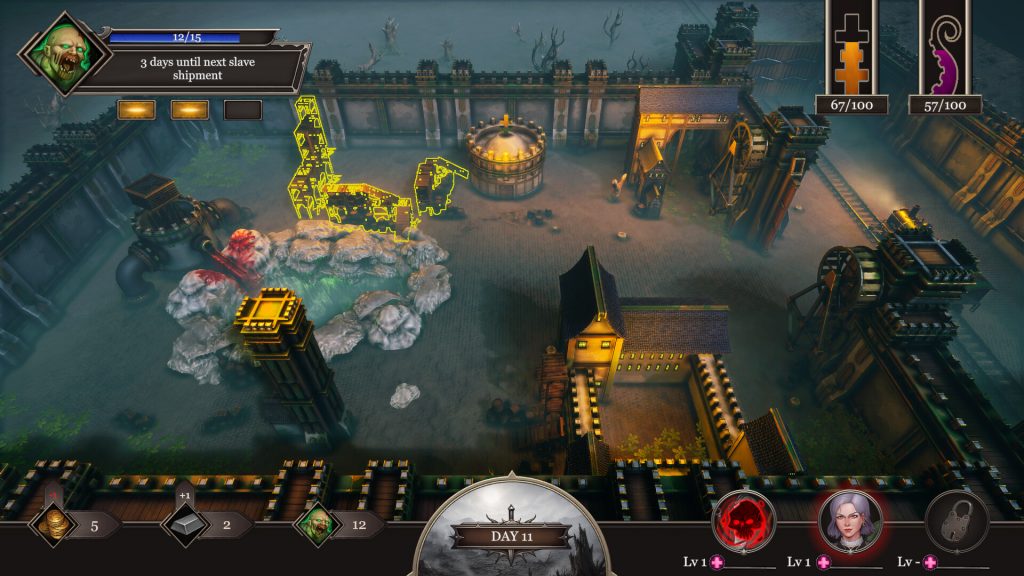
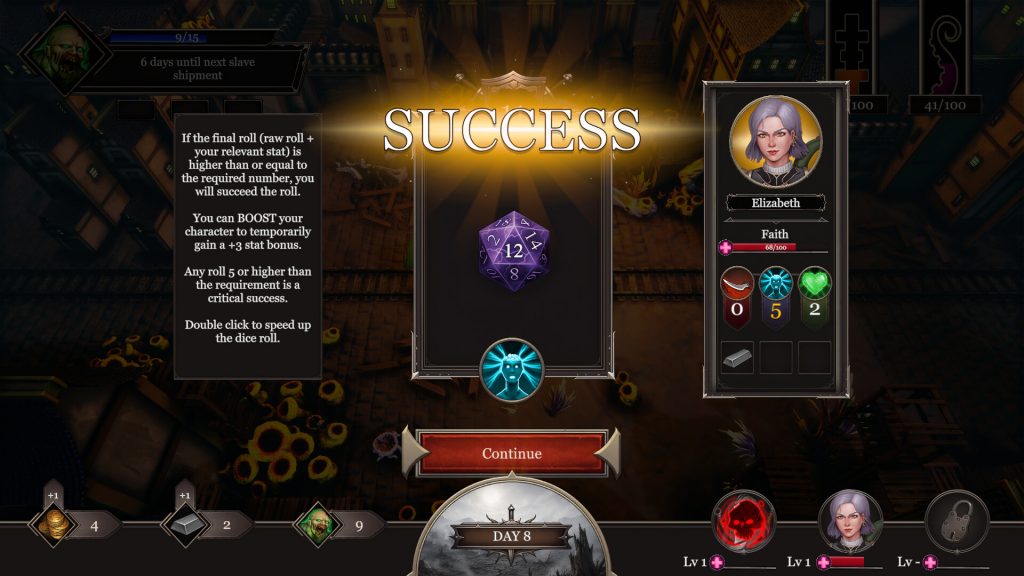
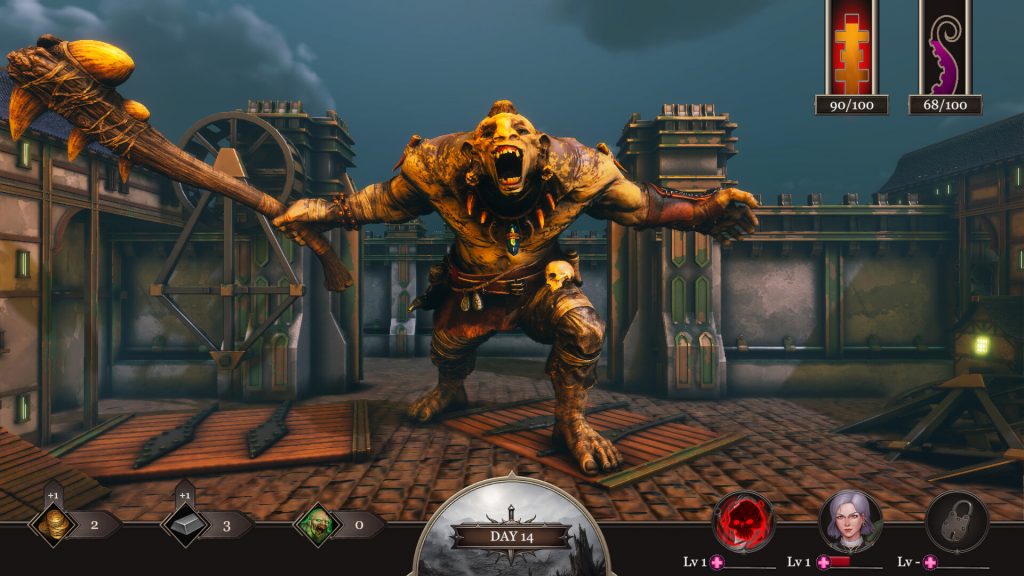
The steampunk aesthetic applied to an inquisition creates a specific industrial-religious fusion that Victorian-era alternative history fiction has explored in text but that games have engaged with less directly. The steam machinery, the iron architecture, the industrial scale of production and processing applied to the work of identifying and eliminating religious deviation — the visual combination is specifically designed to make the institutional apparatus feel both technologically impressive and morally appalling.
The isometric view appropriate for management games also provides the distanced perspective that makes the system’s workings legible while maintaining the emotional distance that allows players to operate within it. Seeing the city from above, as its manager, is a perspective that games use to create the specific relationship of someone responsible for systems rather than someone experiencing them from inside.
The high gore and violent presentation that the developer specifically notes as intentional reinforces the moral weight of the choices being made. A sanitized inquisition management game would create the same systems with less visceral consequence; the graphic representation of what these choices actually mean in human terms is part of the game’s critical project rather than gratuitous decoration.
The Madness System as Institutional Mirror
The madness mechanic — spreading through the city as extreme decisions accumulate, requiring increasingly extreme responses to control, pushing players toward the kind of escalatory logic that institutions engaged in persecution have historically followed — is the most interesting systemic design element in what’s been publicly revealed.
Institutional persecution tends toward escalation not through individual malice but through systemic logic: each extreme measure creates new instabilities that require further measures, while the original external threats continue to demand response. The madness system appears to be modeling this dynamic: the management decisions that maintain short-term stability create long-term systemic deterioration that demands management decisions of even greater extremity.
This is the kind of emergent systemic critique that management games can produce that other game formats can’t — not by telling players that power corrupts, but by creating systems where players experience the logic of corruption from inside it, making the escalatory choices not because they want to but because the system they’re managing rewards no other approach.
Who This Is For
Strong fit for: dark management game enthusiasts who want moral weight in their resource management systems; Frostpunk and This War of Mine players who appreciate games that make institutional moral compromise the subject rather than the context; steampunk aesthetic fans who want the setting applied to more somber subject matter than adventure or action; roguelite strategy players who want narrative and moral stakes alongside run-to-run variation; JanduSoft catalog followers who trust the publisher’s taste in unusual indie concepts.
Cautious fit for: players who prefer morally comfortable management games where optimization feels good rather than troubling; roguelite players who want pure mechanical depth without the thematic weight; players who find gore and dark content in management games dissonant rather than purposeful.
Less ideal for: players who specifically want action-focused gameplay over management and strategy; anyone who finds inquisition subject matter personally uncomfortable regardless of critical framing; players seeking multiplayer options.
What to Watch For
The Steam Train Fest demo is the first evaluation opportunity for whether the moral weight the developer is describing translates into mechanical design rather than remaining atmospheric intention. Management games that want to make players feel institutional pressure need their resource constraints and decision consequences to actually reproduce that pressure — if the game is winnable through optimal play without confronting the moral stakes, the thematic intention is undercut by the mechanical reality.
The rebellion and madness systems specifically need to create the escalatory logic that the premise describes. If madness is a resource to manage like any other, without the specific quality of worsening responses creating worsening conditions, the systemic critique loses its force.
Q4 2026 gives Steam Veil Games the development time to refine what the demo reveals about the current implementation. How the community responds to the demo — specifically whether the systems produce the intended experience of institutional moral pressure — will shape the final game’s direction.
The Takeaway
Dark Rail is among the more conceptually ambitious management roguelites currently in development: a Spanish solo developer using the inquisition as a management framework to explore how institutional power creates the conditions for its own moral corruption through systemic logic rather than individual villainous choice. The steampunk industrial setting, the madness escalation system, and the train expedition operational structure provide the mechanical vocabulary for this exploration.
The Steam Train Fest demo is the first opportunity to evaluate whether the concept’s ambition is matched by its execution. The positive early press and community response suggests the visual and atmospheric elements are working; whether the systems produce the specific institutional pressure the developer is aiming for will be the question the demo answers.
The quota needs filling. The madness is spreading. The trains are ready for dispatch. And somewhere in the decisions required to keep the city standing through another day, the nature of what this institution actually is becomes difficult to ignore.
Demo available from July 20 via Steam Train Fest. Q4 2026 for full release.
Information regarding ‘Dark Rail’
| item | detail |
|---|---|
| Developer | Steam Veil Games (Spain, Solo Developer) |
| Publisher | JanduSoft (Barcelona, Spain) |
| Genre | Dark Management Roguelike / Turn-based Strategy / City Management |
| Release platform | PC (Steam), Nintendo Switch, Xbox Series X |
| Scheduled for release | Q4 2026 (exact timing TBD) |
| Demo Release | July 20, 2026, Steam Train Fest |
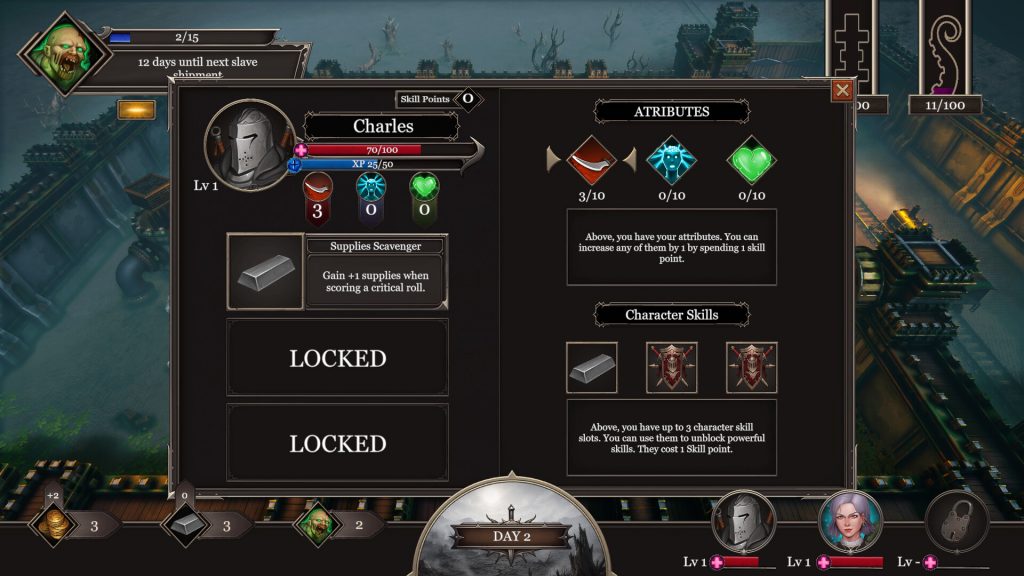
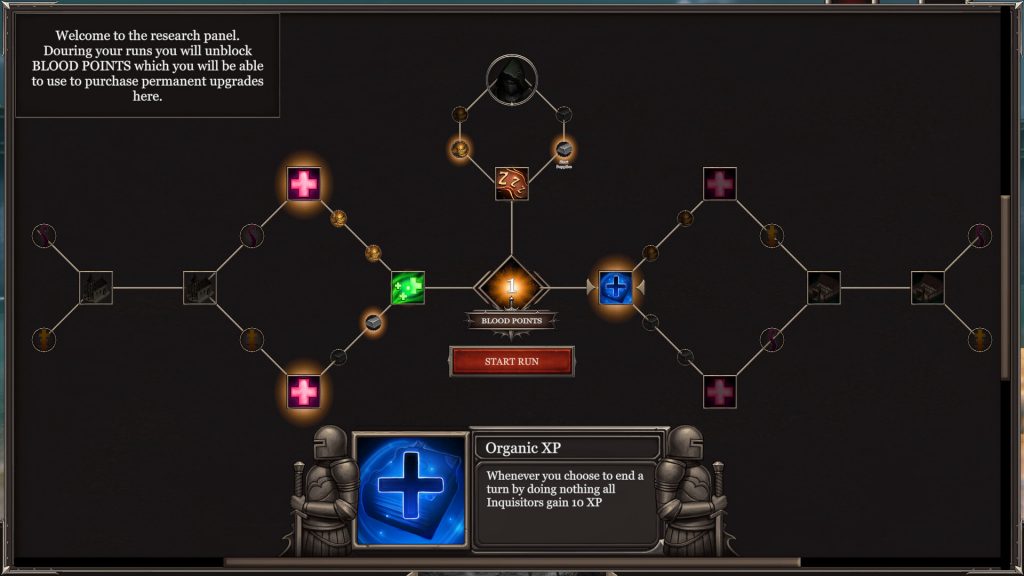
| core system | Resource management, Interrogator training/ability unlocking, Headquarters expansion, Train expeditions, Rebellion/Madness management |
| Steam Page | Shortcut |