Tower defense games have a fixed structural assumption that Spirit Route inverts: the path exists, and your job is to build defenses along it. Spirit Route asks a different question. What if you designed the path?
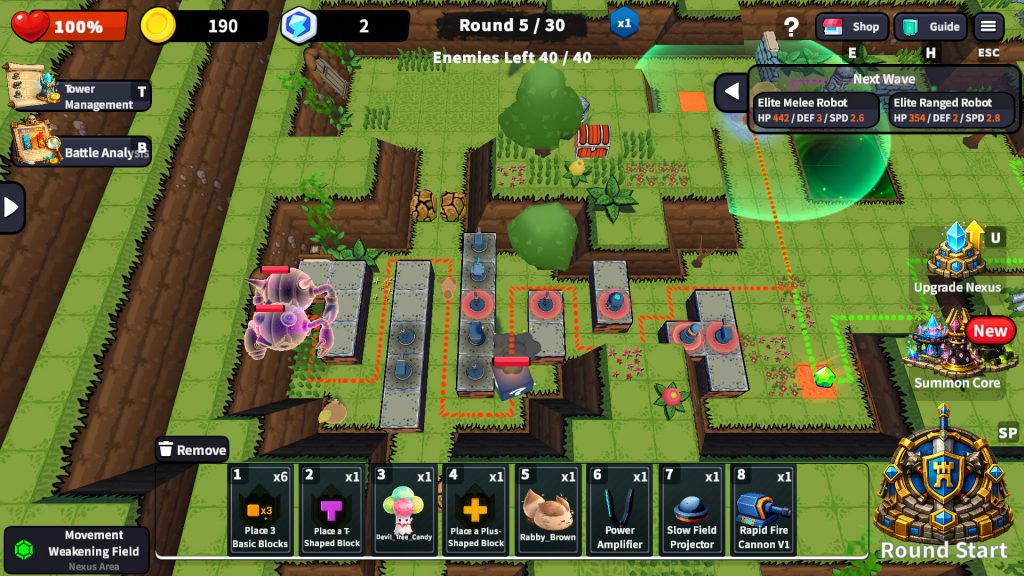
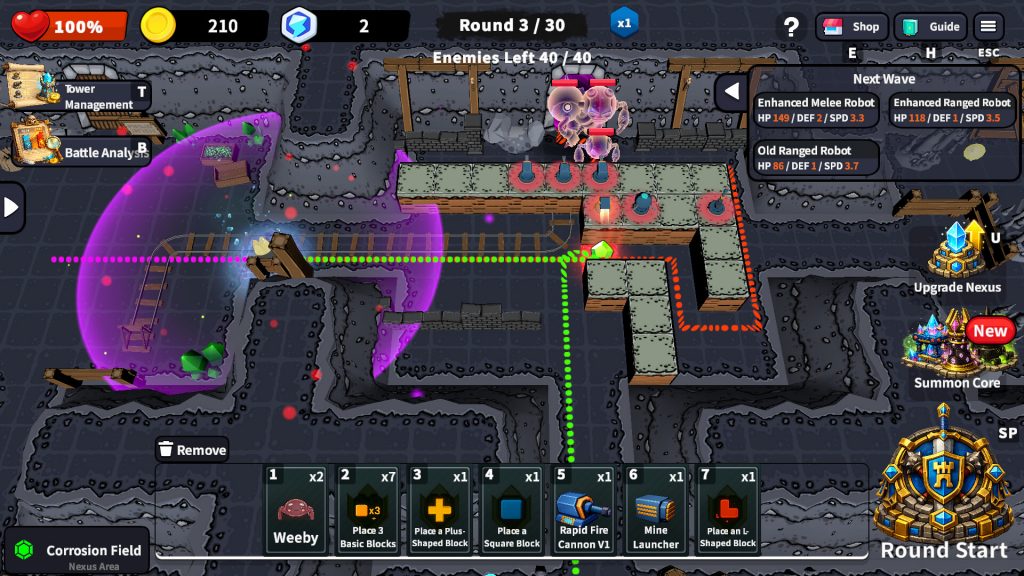
Korean solo developer Curious Forge’s tower defense game arrives on Steam Early Access July 24 with a mechanic that restructures the genre’s strategic decision space. Rather than placing towers to defend a predetermined enemy route, players place tiles to construct the route itself — choosing how long, how winding, and how strategically useful the path is before placing the towers that defend it.
The inversion sounds simple and creates cascading strategic implications.
The Path Design as Primary Strategy
Standard tower defense strategy is build-order optimization: given a fixed path, what towers do you place at which positions in what sequence to handle the incoming enemy composition? The path’s geometry is a constraint to work within; the defensive placement is the expression of strategy within that constraint.
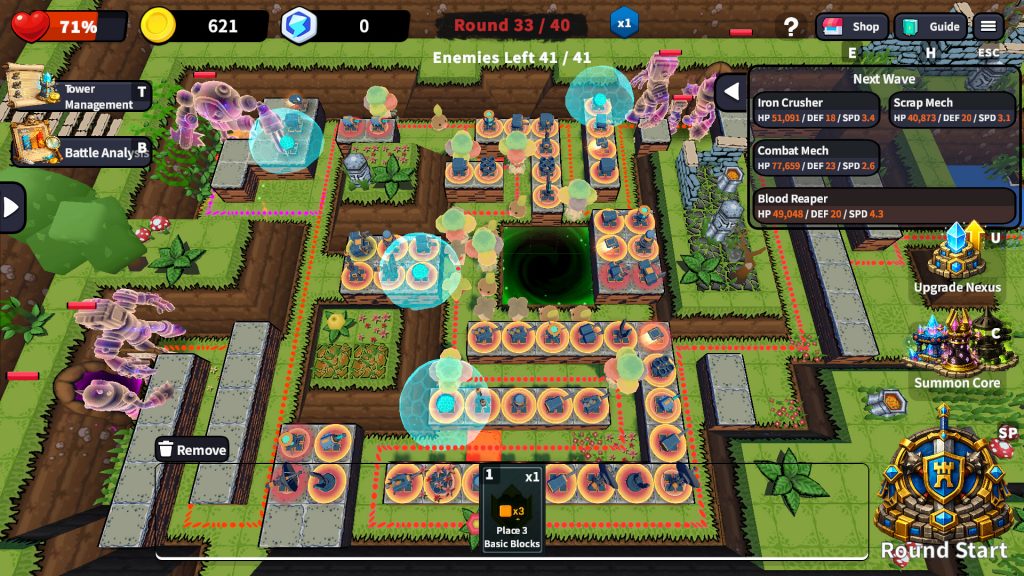
Spirit Route removes this constraint and makes it the first strategic question rather than an assumption. The player who designs a long, winding path buys more tower placement time and more distance for damage accumulation before enemies reach their target — but also spends resources on tile placement that could have gone toward tower construction, and extends the path that the Nexus must also travel. The player who designs a short, direct path saves tile resources and accelerates Nexus movement but has less engagement distance for towers to work with.
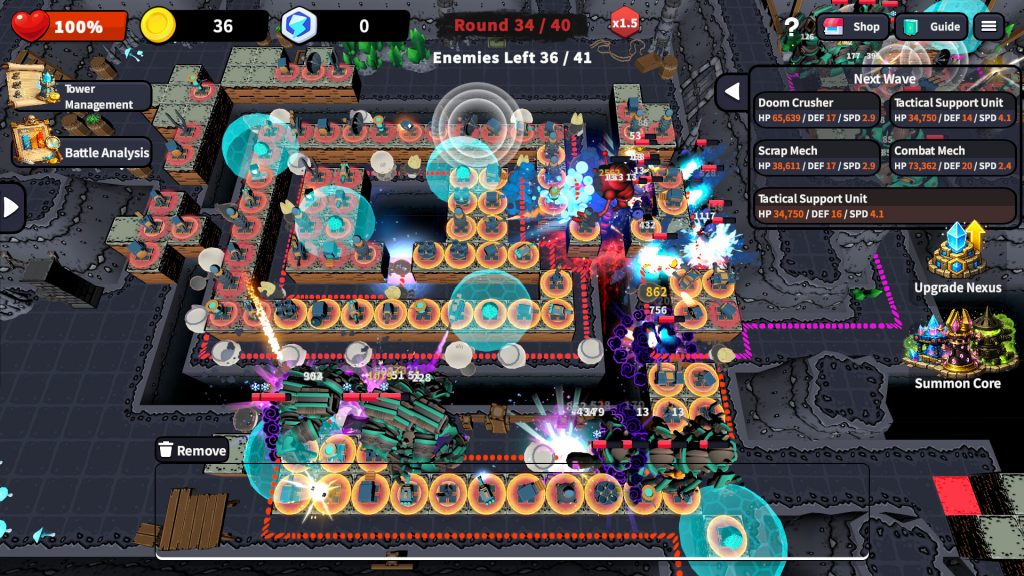
This creates strategic decisions at path design that don’t exist in standard tower defense. The shape of the path matters: corners that force enemies to slow down, long straight sections where linear-fire towers maximize efficiency, chokepoints that concentrate enemies for area-effect attacks. The path designer and the tower placer are the same person, which means the tower placement strategy must be conceived alongside the path design rather than after it.
The additional consideration — that enemies and the Nexus travel the same path — extends this further. A path optimized for maximum tower exposure time is also the longest path the Nexus must travel. Speed is a resource that cuts both ways.
The Nexus and the Rage Wave
The Nexus escort mechanic is the second structural innovation that distinguishes Spirit Route from standard tower defense, and it interacts with the path design mechanic in specific ways that create the game’s central tension.
In most tower defense games, the objective is to prevent enemies from reaching a fixed point — a base, a gate, a core — by eliminating them before arrival. The player is entirely defensive; enemies are the moving element and the player’s constructions are the static response. Spirit Route‘s Nexus introduces a moving allied element: an entity that must reach the destination rather than an entity that must be prevented from reaching it.
The Nexus moves along the player-designed path toward its destination. When it arrives, the standard wave structure ends immediately and the Rage Wave begins — a final intensified assault that tests everything built to that point. This creates a timer that the player controls through path design and Nexus movement speed. A player who constructs a long path and slows the Nexus buys preparation time; a player who constructs a short path and allows fast Nexus movement reaches the Rage Wave before defenses are adequate.
The Rage Wave itself is the consequence converter. All the preparation decisions — path length, tower selection, upgrade sequence, Nexus timing — resolve against the Rage Wave’s specific demands. A well-prepared defense with adequate time handles it; an under-prepared defense rushed by Nexus arrival fails against it. The Rage Wave gives every preceding decision consequences beyond incremental wave management.
This temporal structure is fundamentally different from standard tower defense’s spatial structure. Standard tower defense asks “where do I place things?” as its primary question; Spirit Route adds “when do I let the Nexus arrive?” as an equally weighted strategic dimension.
The Spirit and Core Systems
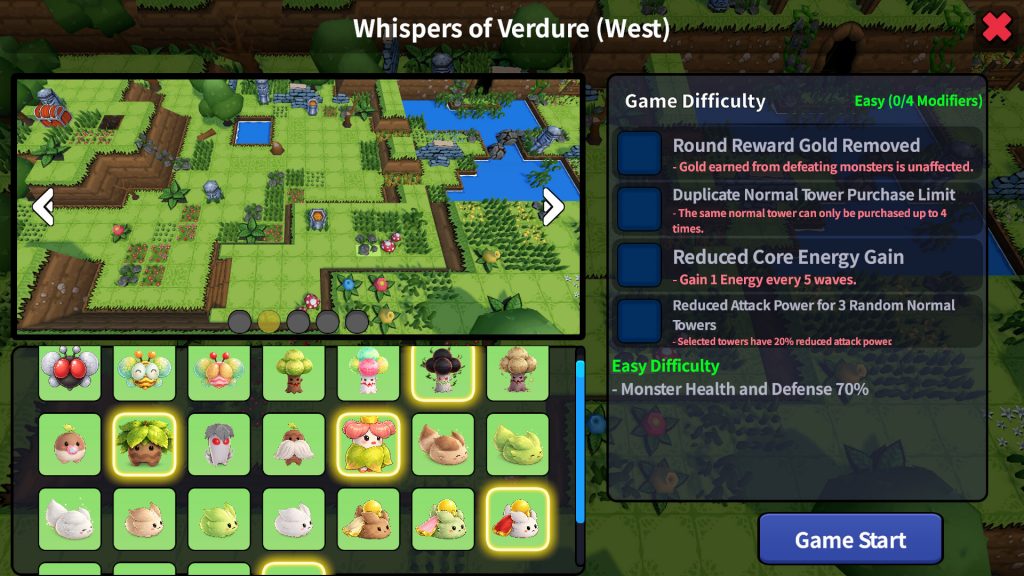
The Spirit system — selecting from multiple Spirit Nexus types before each run — provides the character differentiation layer that gives Spirit Route roguelite replayability beyond map variation. Different spirits presumably offer different passive advantages, different tower access, or different resource generation patterns that shape how a given run develops its path and defense combination.
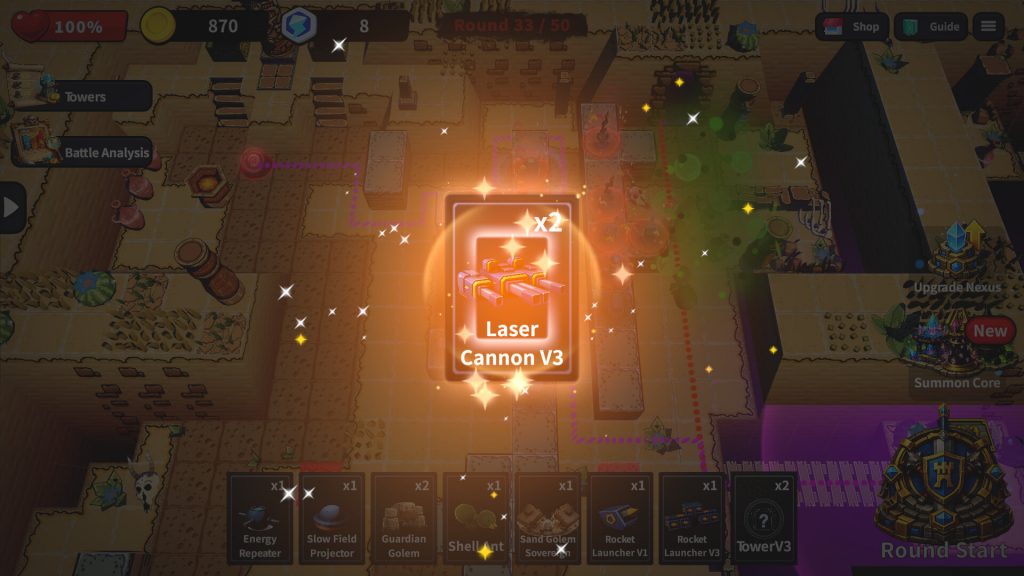
The Core summoning mechanic — spending accumulated resources to summon powerful Cores that unlock new towers or strengthen combat capabilities — provides the escalating power investment system that lets runs develop toward more capable late-game states. The interplay between spending resources on path tiles, spending on towers, and spending on Core summoning is the resource allocation puzzle that different Spirit types presumably resolve differently.
The random shop and item card system adds the roguelite selection layer familiar from deckbuilders: each run presents different options that the player combines into a build adapted to that run’s circumstances rather than executing a predetermined optimal strategy. This prevents runs from becoming mechanical optimization of a known solution — the specific options available force adaptation, which keeps repeated play interesting.
The Aesthetic and AI Disclosure
The 3D top-down fantasy aesthetic with grid-based tile placement creates a visual register that reads as casual relative to the strategic depth the mechanic implies. The cute fantasy characters and accessible visual presentation lower the apparent barrier to entry, which is appropriate for a game whose core mechanic (path construction) is genuinely novel and might otherwise appear daunting.
The AI disclosure is the fourth such disclosure framework we’ve encountered in this month’s coverage, and Curious Forge’s is the most specific: generative AI was used for logo, character icons, some promotional images, and as production assistance for marketing images based on actual game screenshots. This disclosure distinguishes between AI in promotional materials (where its use is acknowledged) and AI in game assets themselves (not claimed). For a solo developer, this represents the kind of practical tooling decision that the solo game development community is navigating broadly, and the transparency is appropriate.
The Early Access Launch State
Curious Forge’s description of the launch state — playable from beginning to end, core systems and primary content complete — is the correct Early Access framing that distinguishes “early access as delayed release” from “early access as genuine community development.” A game that isn’t complete beginning-to-end at Early Access launch is asking players to pay for an incomplete experience; Spirit Route is offering a complete core game with the promise of expansion during the community development period.
The 6-12-month expected duration is a realistic timeline for a solo developer planning substantial content additions — new stages, spirits, game modes, and achievements — without overcommitting to a specific date. The commitment to maintain current pricing during Early Access and evaluate price increases at full release is the correct commercial decision for a game that depends on community goodwill for the content iteration phase.
The multi-language support at launch — English, Korean, Japanese, Simplified and Traditional Chinese — reflects a genuine international release ambition that solo developers often achieve only after the initial launch. Having these languages available from Early Access day one reduces friction for non-English players who might otherwise wait for localization.
Who This Is For
Strong fit for: tower defense enthusiasts who have found the genre’s fixed-path structure limiting and specifically want path design as a strategic dimension; roguelite strategy players who enjoy the combination of build construction and run-to-run variety; solo developer enthusiasts who follow smaller studios’ Early Access projects; players who want to participate in the design iteration process through community feedback during Early Access; fans of casual-aesthetic games with more strategic depth than the visual presentation initially suggests.
Cautious fit for: tower defense purists who prefer the established fixed-path genre convention and find path design as an additional layer of unwanted overhead; players who want complete games before purchase rather than Early Access engagement; players who specifically dislike roguelite randomization in their strategy games.
Less ideal for: players who dislike tower defense structure regardless of mechanical innovation; anyone seeking multiplayer strategy options; players wanting narrative-driven experiences.
What to Watch For
The Rage Wave’s balance is the first critical Early Access evaluation. The mechanic that ends preparation time when the Nexus arrives needs calibration across the full range of path designs and defensive builds — too easy, and it doesn’t feel like a climactic test; too hard, and it punishes the path design decisions that the entire preceding game was about. Whether Curious Forge has achieved a Rage Wave difficulty that rewards good preparation without demanding perfect optimization will determine the mechanic’s reception.
The Spirit system’s diversity is the second key question. Tower defense roguelites with character selection live or die on whether different characters genuinely change how runs develop or primarily provide aesthetic variety. If different Spirit types create meaningfully different optimal path shapes, tower compositions, and resource allocation priorities, the selection adds genuine replay value. If they primarily modify numbers on similar strategies, the diversity is shallower than it appears.
Community feedback integration during Early Access will be the ongoing evaluation. A solo developer with a genuinely novel mechanic needs player feedback to identify which aspects of the path design system are engaging versus frustrating, which Spirit types are under-explored versus dominant, and which Rage Wave scenarios feel fair versus arbitrary. How quickly and substantially Curious Forge responds to this feedback will define the Early Access period’s quality.
The Takeaway
Spirit Route is making a specific design argument: that the most underexplored strategic dimension of tower defense is the path itself. By giving players control over where enemies walk — and making those same paths the route the Nexus must take to trigger the finale — the game creates a strategic decision space that the genre has conventionally treated as fixed.
The Rage Wave, as a climactic resolution, gives every path design decision a consequence beyond incremental wave management. The Spirit selection and Core summoning provide the roguelite variety that sustains repeated engagement. And the solo developer’s commitment to a complete beginning-to-end experience at Early Access launch provides the baseline quality that Early Access requires to maintain player trust.
For tower defense enthusiasts who have wanted to answer the question “what if I could design the path?” — July 24 is when the experiment begins.
The tiles are placed. The path is designed. The Nexus is moving. And somewhere in the distance, when it arrives, the Rage Wave starts.
Information regarding ‘Spirit Route’
| item | detail |
|---|---|
| Developer | Curious Forge (Solo Development) |
| Publisher | Curious Forge (Self-published) |
| Genre | Tower Defense / Strategy / Path Construction |
| Release platform | PC (Steam) |
| Release date | July 24, 2026 (Early Access) |
| Expected Early Access Period | About 6 to 12 months |
| Supported languages | English, Korean, Japanese, Chinese (Simplified/Traditional), etc. |
| core system | Tile-based path construction, Nexus escort, Spirit system, Core summoning, Berserk wave |
| Steam Page | Shortcut |