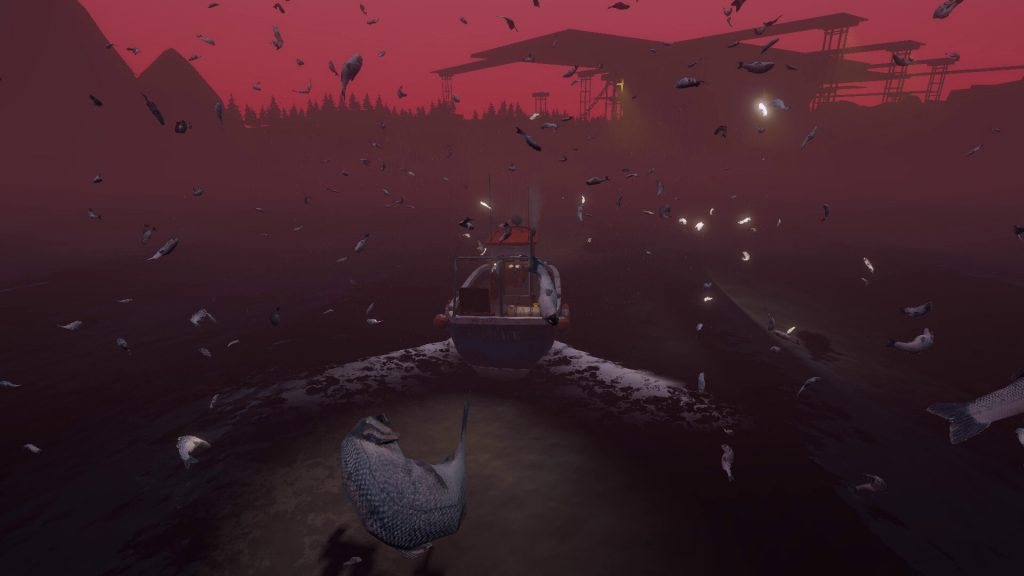
The vacation destination was supposed to be relaxing. What arrived instead: Greywharf, a waterlogged port town where the research facility appears abandoned, the fish say things to you and occasionally explode, and whatever lives in the water at night is not fishing.
Trawler’s Wake, developed by the three-person international team Icebound Labs in their spare time outside their primary jobs, has updated its Steam wishlist page with a new gameplay trailer and is building pre-release momentum through short-form video spread on YouTube Shorts and similar platforms. No publisher, no full-time development, no confirmed release date — but a concept that has generated enough wishlist milestone achievements that the team describes the community attention as something they couldn’t have imagined when they started.
The press comparison doing the most work in the game’s early coverage is “Dredge in first-person.” This is useful framing: Dredge (2023, Black Salt Games) is the fishing game that successfully combined maritime fishing with Lovecraftian horror through a top-down perspective, earning critical acclaim and commercial success for a game that understood the specific dread of deep water and what might live in it. Trawler’s Wake is attempting a related synthesis but with the first-person immersion that Dredge deliberately avoided.
The Day/Night Architecture
The structural split between day fishing and night survival is Trawler’s Wake‘s foundational design decision, and it’s more elegant than the simple description suggests.
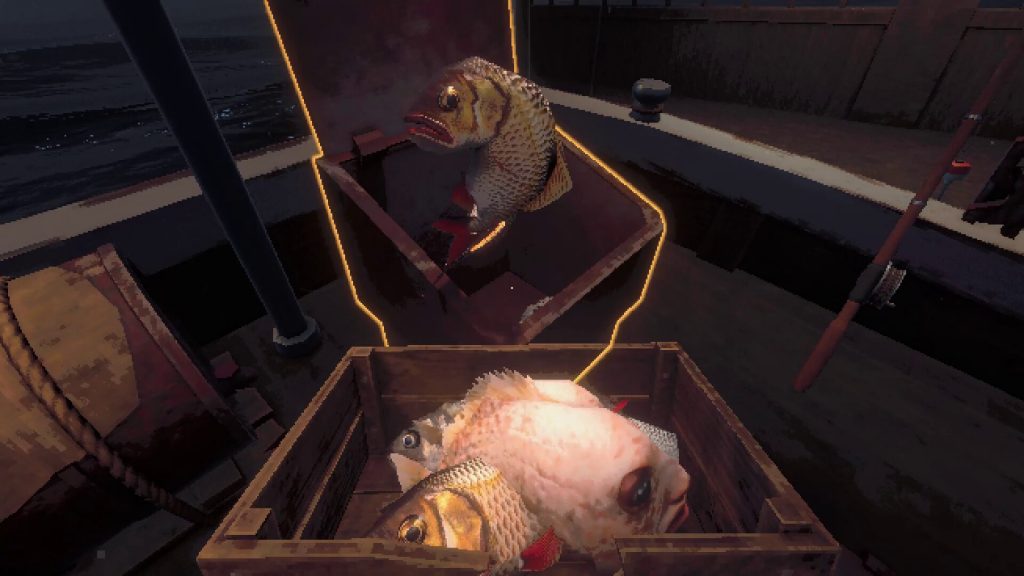
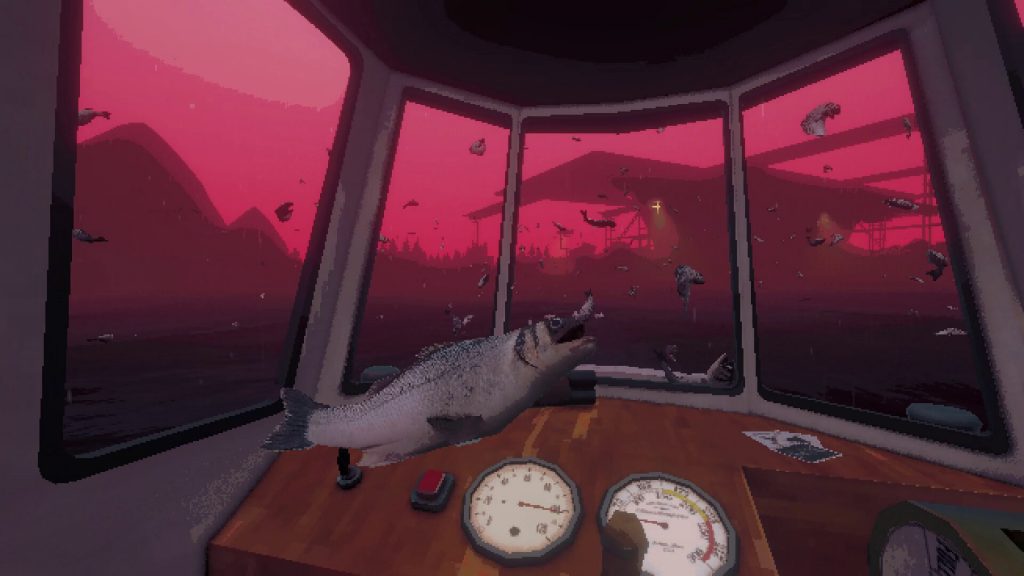
Most survival horror games create tension through resource depletion, threat proximity, or time pressure. Trawler’s Wake creates it through temporal inevitability: day is always turning toward night, and everything you do during daylight hours is preparation for what happens when it gets dark. The fishing that feels like a relaxed activity is simultaneously resource acquisition, equipment funding, and the clock ticking down to when the sea becomes hostile.
This structure creates a specific rhythm of engagement that pure horror games or pure fishing games can’t replicate. The daytime sessions have genuine functional stakes — catching enough to fund repairs and upgrades, exploring far enough to find useful abandoned equipment, managing fuel for the return trip — while the nighttime sessions have the horror stakes of survival under threat. Neither mode is purely mechanical nor purely atmospheric; each borrows urgency from the other.
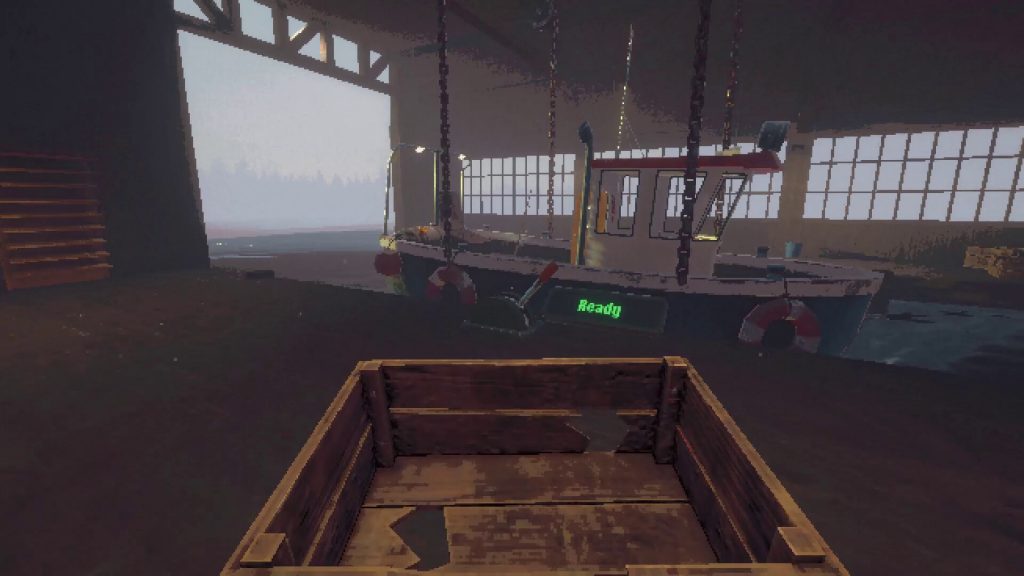
The loadout decision before departure extends this tension backward in time. Before you leave the dock, you’ve already made strategic choices: prioritizing fishing rods and storage over weapons means better day efficiency at the cost of night vulnerability; prioritizing weapons and fuel over fishing capacity means safer nights at the cost of slower progression. These pre-departure decisions shape the entire session, and their consequences aren’t fully visible until night falls.
The Fish That Are Not Normal
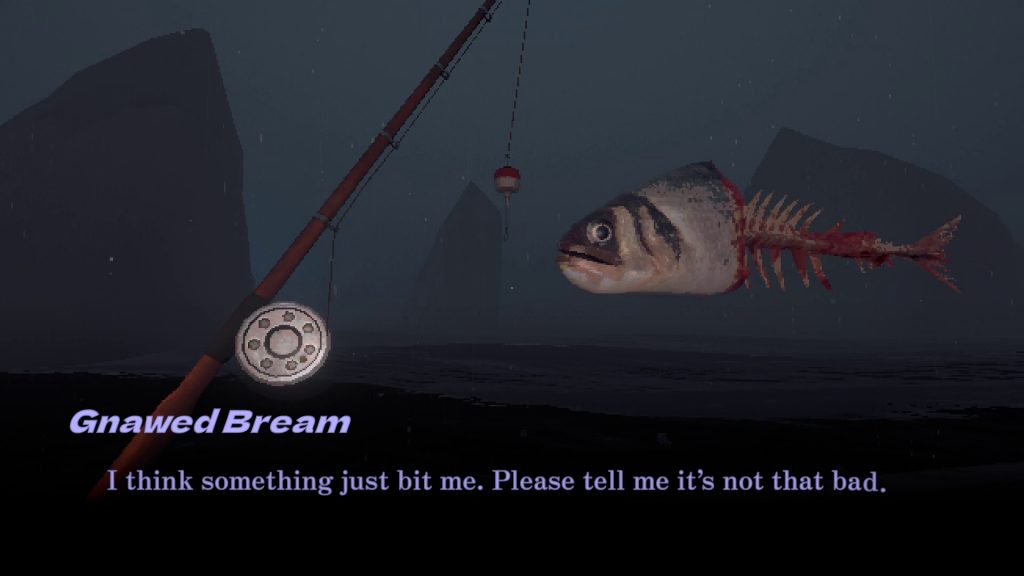
The fish in Trawler’s Wake behave in ways that deserve specific attention because they’re doing tonal work beyond simple comedy. Fish that explode, fish that speak to the player, fish that startle other fish, fish that make requests — these aren’t just absurd additions to the fishing simulation. They’re the signals that the world the player has arrived in is fundamentally wrong in ways that extend beyond the obvious surface-level horror.
In horror, the uncanny value of familiar things behaving abnormally is often more effective than a direct threat. A fish that talks to you doesn’t attack you, but it implies that the natural laws you depend on for understanding the world have been disrupted. If the fish are wrong, everything might be wrong. The comedic surface of these interactions (exploding fish is inherently funny) coexists with the horror implication (what caused the fish to be this way, and does the same thing affect everything else in the water?).
The “Evil Dead B-horror sensibility” comparison in the source materials places this tonal approach correctly. Evil Dead is specifically the horror film that found ways to be genuinely scary while also being darkly funny — the gore is excessive enough to be comedic, and the situations are awful in ways that produce laughter through their extremity. B-horror in this tradition uses comedy not to defuse horror but to heighten it through contrast: the funnier the setup, the more disorienting the genuine threat becomes when it arrives.
The Trawler as Survival Architecture
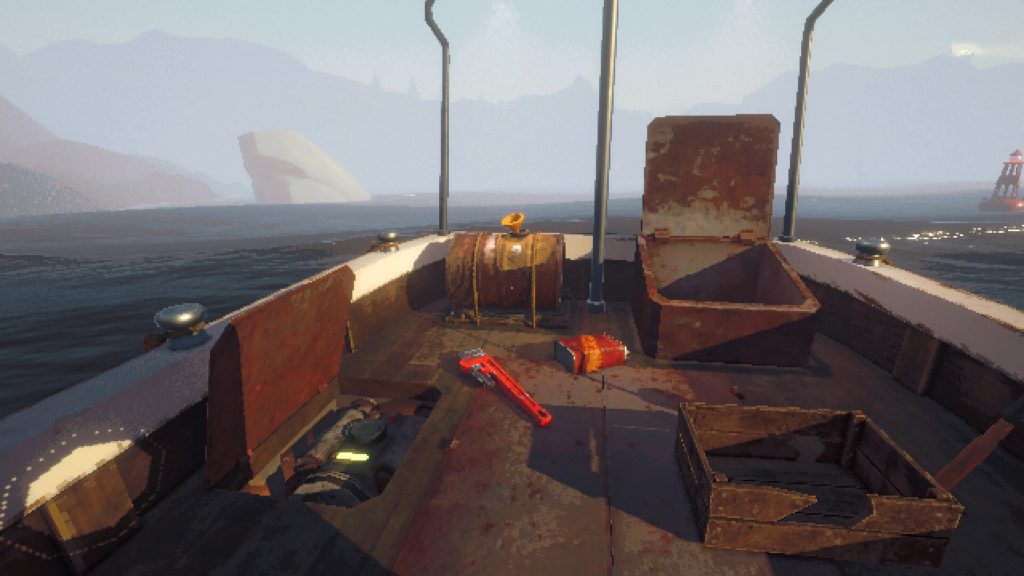
A fishing trawler as the central survival and progression system is the correct mechanical choice for a maritime horror game, and Trawler’s Wake appears to take this seriously rather than treating the boat as a background prop.
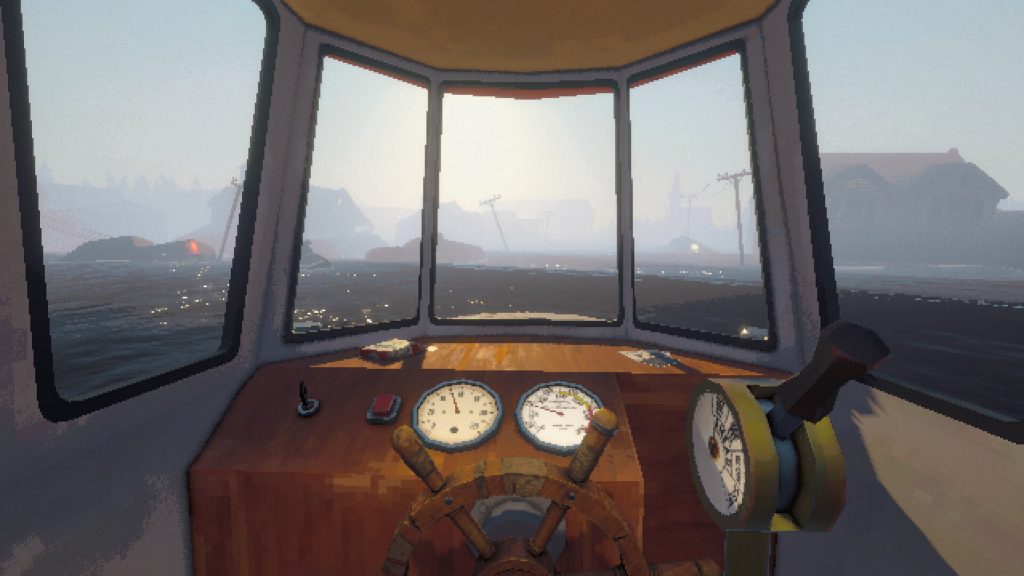
The trawler is home, transportation, workshop, and armory simultaneously. Fuel management connects to range — how far you can explore is directly limited by how much fuel you have and how efficiently you route. Engine maintenance connects to survival — a broken engine at night in hostile water is a crisis, not an inconvenience. Weapon storage connects to night strategy — what you can fight with depends on what you choose to pack before departure. All of these systems interact with each other through the limited storage space, forcing genuine trade-off decisions.
The upgrade progression from “old rusted trawler” to “capable ocean-going vessel” is the long-term engagement arc. Early sessions are limited by range, capacity, and equipment; later sessions open distant waters that were inaccessible, allow surviving night conditions that would have been fatal earlier, and reveal whatever is in the deeper water that couldn’t be reached before. This progression arc gives the fishing-and-survival loop persistent meaning across multiple sessions rather than each session being equivalent.
The Greywharf Setting
Greywharf — a flooded, abandoned port town — is doing specific horror work with the specific maritime aesthetic that “drowned” environments produce. Water where it shouldn’t be is one of horror’s most reliably effective visual registers: partially submerged streets, water lapping through doorways, structures emerging from the sea as either ruins or (worse) still inhabited by something. The specific uncanniness of flooded human spaces is that they’re legible as having been normal — you can see what the normal looked like, which makes the abnormal more disturbing.
The abandoned research facility in Greywharf is the explanatory origin that horror games typically deploy for their monsters — and specifically, the research facility as a horror setting has a specific cultural history that the game’s development team clearly recognizes. Research facilities in horror are where the rules were broken deliberately, where the wrong experiments were conducted, where what’s now in the water was made or unleashed. Greywharf’s research connection is probably both the source of the mutations and the source of whatever information the player needs to understand the situation fully.
The revelation structure — uncovering the town’s hidden secrets progressively — provides the narrative layer that converts “survive until morning” into something with direction and purpose. Why Greywharf? What happened to the research facility? What are the mutations, and where did they come from? These are the questions that make players return to the dangerous night sessions despite the risk.
The Icebound Labs Development Context
Three developers working on this as a side project alongside primary employment is both the constraint that makes Trawler’s Wake‘s development longer and the authenticity signal that often produces the most personally invested games. Studios founded by developers who love the genre they’re working in, building what they genuinely want to play without external commercial pressure, tend to produce work that communicates that investment.
Self-publishing without a publisher removes both the resource support and the external development pressure that publisher relationships provide. For a side-project studio, this is probably the correct choice — publisher relationships typically involve delivery milestone commitments that are difficult to honor while also working primary jobs. The tradeoff is longer development timelines and less marketing infrastructure, managed through community-building on Steam and social media.
The team’s description of being surprised by the wishlist attention — “we couldn’t have imagined this level of interest before launch” — reflects the genuine response of a small team whose concept communicated further than their expectations. The short-form video spread on YouTube Shorts and similar platforms suggests the visual premise (fishing on a trawler, then terror at night) communicates immediately in short clips.
The Dredge Comparison Examined
“Dredge in first-person” is a useful shorthand with specific implications worth unpacking. Dredge worked because it understood that what makes maritime horror effective is the unknown of depth: you fish up what’s below the surface without being able to see it until it arrives, and the progression from normal fish to increasingly wrong fish parallels the game’s narrative about what the fisherman is becoming. The top-down perspective was a deliberate choice that created specific tension — you can see your boat and its immediate surroundings, but the water itself is opaque.
First-person changes this fundamentally. In first-person, you’re on the boat, in the environment, physically present in Greywharf. The same darkness that makes the top-down water mysterious becomes the first-person player’s immediate environment. Jump scares become physically possible in ways they aren’t from above. The sense of scale changes — in top-down, the trawler is a game piece; in first-person, it’s the player’s actual location. The monsters aren’t abstract symbols of threat; they’re things happening to the character the player inhabits.
This isn’t “Dredge but better because first-person.” It’s a different kind of maritime horror experience that the first-person perspective makes possible. Whether Trawler’s Wake uses that perspective’s specific capabilities effectively will determine whether the comparison is elevation or merely translation.
Who This Is For
Strong fit for: Dredge fans who specifically wanted first-person maritime horror; survival horror enthusiasts who want fishing as the cozy counterpart to the horror; B-horror and dark comedy fans who appreciate absurdist humor coexisting with genuine scares; fishing game players who want existential threat to complicate their sessions; Subnautica fans who enjoyed the specific anxiety of deep water and what lives in it; players who enjoy the loadout strategy of pre-departure resource management.
Cautious fit for: players who specifically prefer the top-down perspective for maritime games; anyone who wants either pure fishing or pure horror without the day/night tonal switch; players concerned about development pace for a side-project team with a TBA release.
Less ideal for: players who dislike jump scares or dark humor; anyone who wants a relaxing fishing game without survival pressure; players seeking narrative clarity over atmospheric mystery.
What to Watch For
A few questions will shape Trawler’s Wake‘s development trajectory toward its unannounced release date.
The first is whether the day/night pacing is calibrated correctly. The transition from fishing calm to survival horror needs to feel genuinely different rather than the same experience with different assets. Whether the atmospheric shift between day and night creates the tonal contrast the concept requires will be the primary experience evaluation.
The second is the abnormal fish system’s implementation. Fish that talk and explode are funny in description; whether they’re funny in the game while also reinforcing the wrongness of Greywharf will depend on the writing and timing of these interactions. Dark comedy in horror specifically requires precision — too much absurdist comedy and the horror deflates; too little and the comedy feels out of place.
The third is the trawler progression’s pacing. For a side-project team, scope management is the critical development challenge. Whether the trawler upgrade arc feels satisfying across the game’s full length without either being too short (missing the depth the concept implies) or too long (requiring content the team may not be able to produce alongside day jobs) will affect the experience’s completeness.
The fourth is simply when. A TBA release from a three-person side-project team is inherently uncertain. How Icebound Labs manages communication as development continues and whether they can maintain the community momentum built by the current wishlist attention through however long development takes will affect the game’s eventual launch position.
The Takeaway
Trawler’s Wake is exactly the kind of pre-release project that earns genuine wishlist attention because the concept communicates clearly and the people making it clearly love what they’re making. Three developers working in their spare time on a fishing-by-day, survival-horror-by-night maritime game set in a flooded port town where the fish occasionally speak and the night brings things from the deep — this is specific enough to be distinctive and appealing enough to the right audience to generate real pre-release momentum.
The Dredge comparison that the international press has reached for is the right reference for the target audience, and the first-person perspective differentiation is a genuine creative choice rather than mere platform variation. The B-horror dark comedy tone, the trawler-as-home survival architecture, and the Greywharf setting’s waterlogged Gothic atmosphere all suggest a team that knows what game they’re making and is building toward it with care.
The sun is still above the horizon. The fish are biting. One of them just said something that doesn’t make sense in any language you know. You sell it anyway. You have fuel to buy and a hull plate to repair before dark.
Night comes at the same time every day.
TBA on Steam. Until then, the wishlist milestone counter keeps climbing, and three developers keep working after their day jobs end.
Information regarding ‘Trawler’s Wake’
| item | detail |
|---|---|
| Developer | Icebound Labs (3-person international indie team, self-published) |
| Genre | Survival Horror / Fishing Simulation / Open World Adventure |
| Release platform | PC (Steam) |
| Release Schedule | Undetermined (TBA) |
| background | Greywharf — A deserted port town teeming with mutants and anomalies |
| core system | Day/Night Dual Structure, Collecting Rare Fish, Troll Maintenance & Upgrades, Equipment Selection |
| Official Channel | X (Twitter) @TrawlersWake |
| Steam Page | Shortcut |