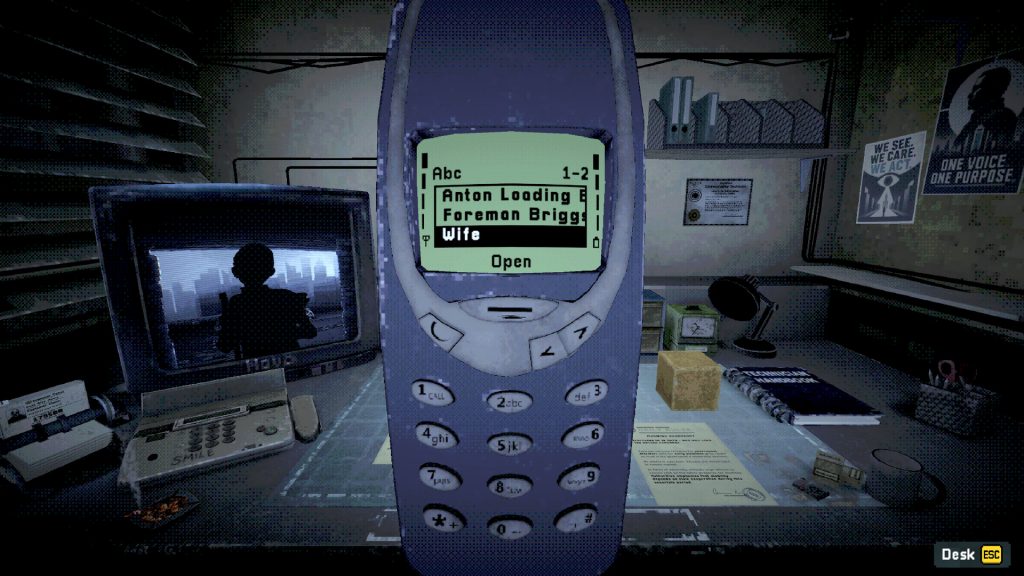
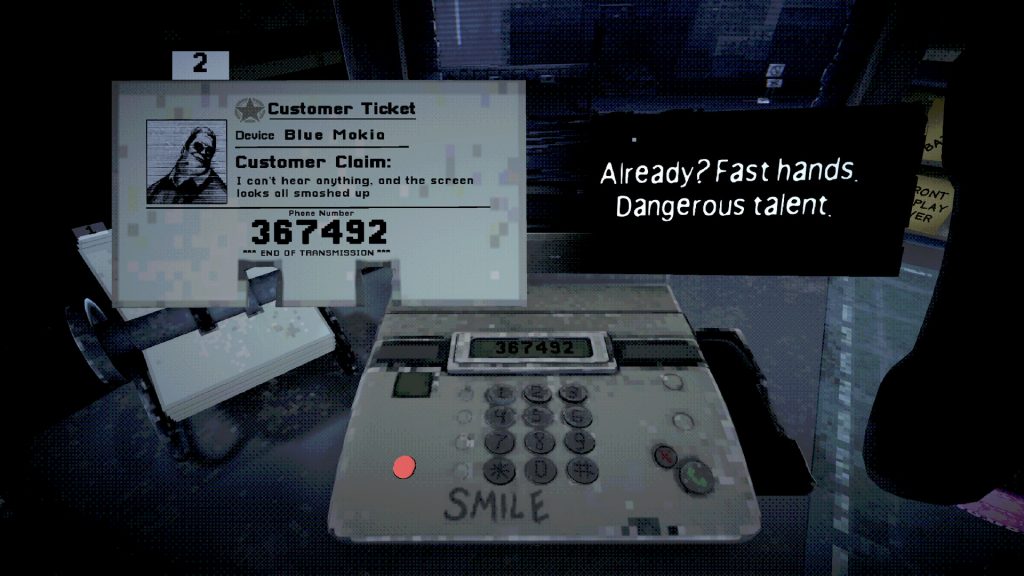
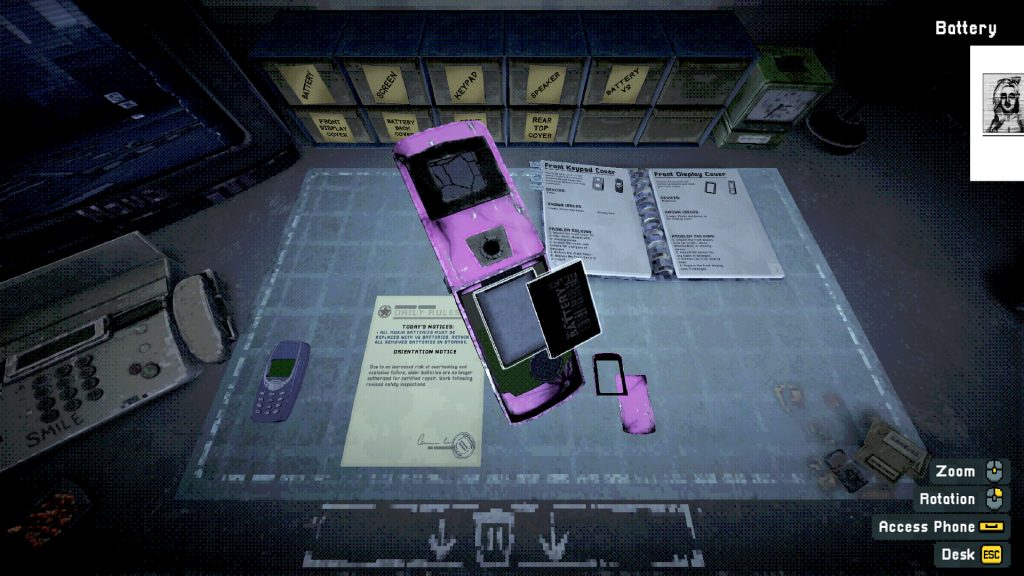
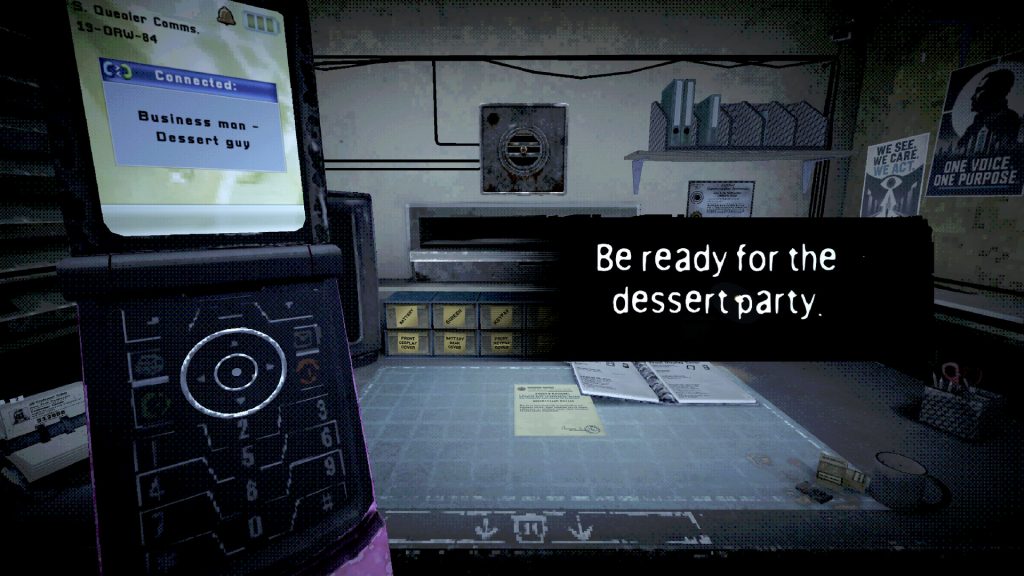
Every morning brings new government directives. Which devices you’re permitted to repair, which parts you’re allowed to use, even which customers you’re cleared to serve — all of it resets daily according to policy handed down from somewhere the player never sees. Don’t Pick Up puts the player behind the counter of a state-licensed phone and communications device repair shop in an alternate-history early-2000s dystopia, where the actual work of fixing broken hardware keeps surfacing information the state would clearly prefer stayed buried.
The Repair Counter as an Inspection Desk
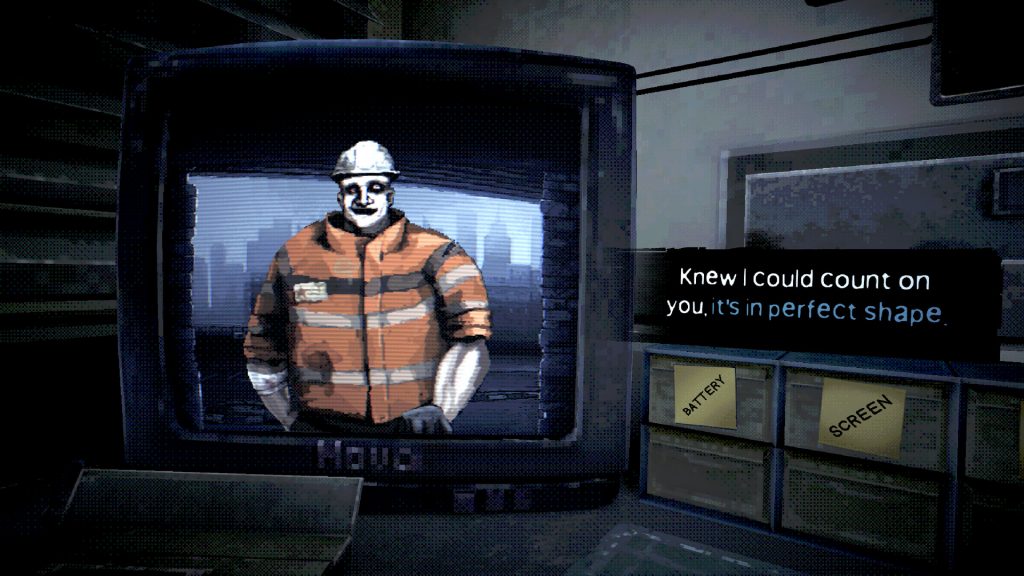
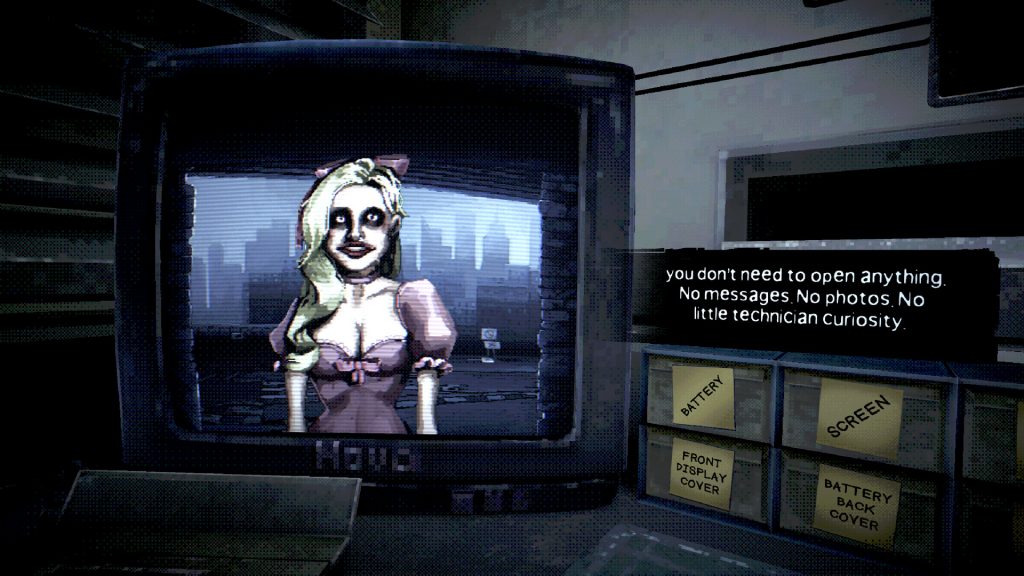
This is a first-person psychological horror built on a now-familiar structural chassis: examine something an authority hands you, discover it contains more than the authority intended you to see, and decide what to do with that knowledge under rules that change on you daily. Where Papers, Please used passports and Selsoviet used ration coupons and The Newspapers of the Day used censored articles, Don’t Pick Up uses broken phones — devices customers hand over for repair that, once opened up, reveal fragments of the political chaos unfolding outside: factional conflicts, conspiracies, and the relationships between people whose names the player wouldn’t otherwise know, all surfacing through whatever records happen to still be on the hardware.
What the player does with that information is the actual game: who to help, what to report, what to conceal. Every choice carries forward into how the story develops and ends, and — in the genre’s now-standard moral architecture — the player has to live with the consequences of each decision rather than simply learning the “correct” answer after the fact.
The daily-shifting government directives are the specific mechanical pressure layered onto this structure. It’s not enough to decide what to do with a piece of incriminating information once — the rules for what’s even permissible to repair, stock, or serve change constantly, meaning compliance itself requires continuous attention, and staying within bounds is its own daily task independent of the moral weight of what the phones reveal.
Compliance and Defiance Under a Moving Target
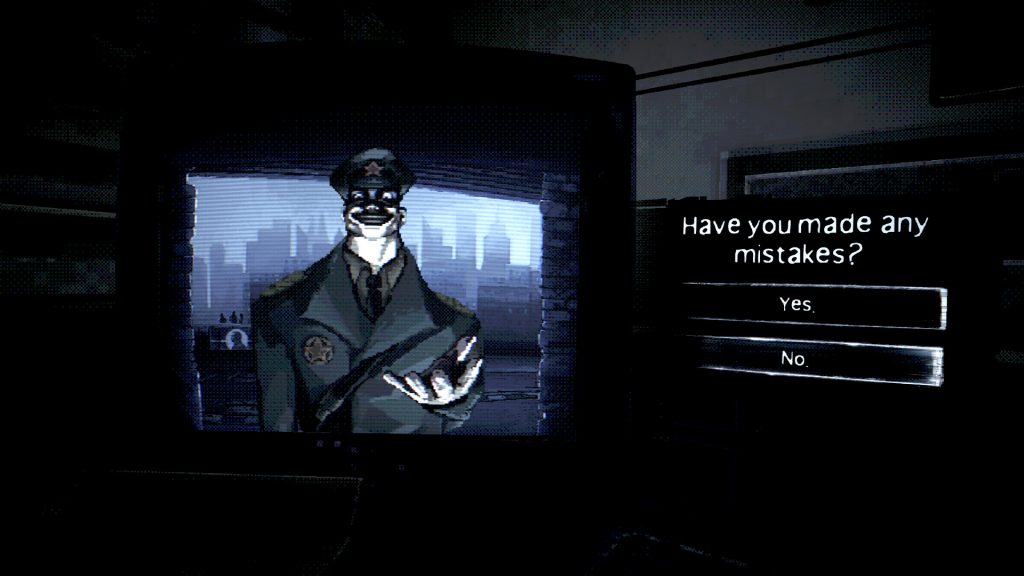
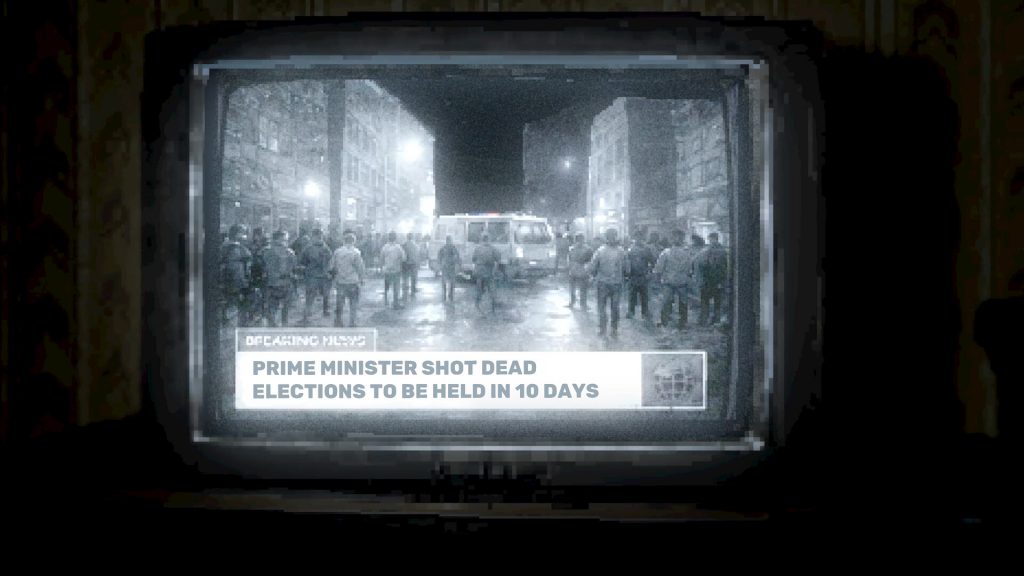
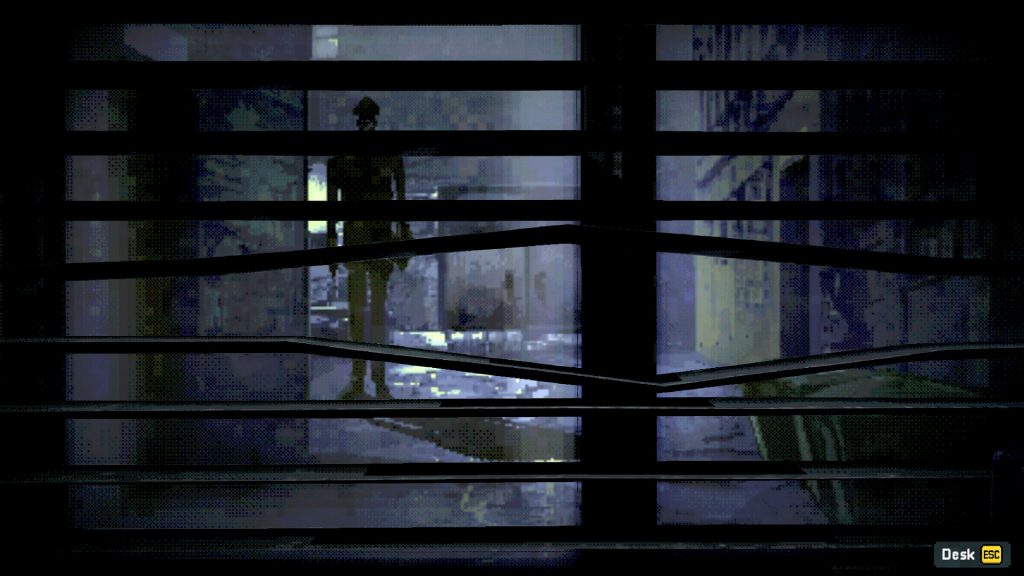
The window behind the counter matters as much as the counter itself: as the game progresses, the political crisis visible in the city outside intensifies, and the player has to maintain the shop’s daily routine while registering that the world around it is deteriorating. The horror register here leans toward the ambient and bureaucratic rather than jump-scare-driven — the dread comes from not knowing what a given device will reveal, and from the accumulating awareness that “just doing your job” is itself a political position when the job is enforcing a government’s daily-changing rules.
Compliance and Defiance Under a Moving Target
The window behind the counter matters as much as the counter itself: as the game progresses, the political crisis visible in the city outside intensifies, and the player has to maintain the shop’s daily routine while registering that the world around it is deteriorating. The horror register here leans toward the ambient and bureaucratic rather than jump-scare-driven — the dread comes from not knowing what a given device will reveal, and from the accumulating awareness that “just doing your job” is itself a political position when the job is enforcing a government’s daily-changing rules.
The Studio and Its Publisher
Quarter Games is a brand-new six-person studio founded this year, and Don’t Pick Up is its debut release, aiming — by the team’s own description — to combine dark worldbuilding with original gameplay systems. Clover Bite, the publisher, brings a track record specifically suited to this kind of debut: the GRIME and GRIME II metroidvania series, and an established relationship with the Tiltan School of Design and Visual Communication through which the publisher has scouted and backed emerging developers and student teams. A first-time studio getting picked up by a publisher with that specific talent-discovery history is a reasonably strong signal, even before any reviews exist.
Who This Is For
Strong fit for: fans of the Papers, Please inspection-and-moral-weight tradition looking for a new object and setting for that structure; players who want horror delivered through bureaucratic dread and accumulating political unease rather than direct scares; narrative adventure fans who want branching choices with real, felt consequences; anyone following Clover Bite’s publishing slate after GRIME.
Cautious fit for: players who need a release date before following (currently TBA, demo only); anyone who wants the game’s actual system depth confirmed through hands-on play rather than a reveal trailer.
Less ideal for: players who dislike first-person narrative-heavy pacing; anyone seeking action or combat mechanics; players wanting multiplayer.
The Takeaway
Don’t Pick Up is a debut studio’s entry into the inspection-game lineage this coverage has tracked repeatedly this year — swapping passports, ration coupons, and newspaper columns for broken phones as the object through which state control and buried truth collide. The daily-shifting directives add a compliance-management layer on top of the genre’s usual moral weight, and Clover Bite’s backing gives a brand-new six-person team real publishing credibility behind an otherwise unproven concept.
The customer at the door needs their phone fixed. What’s actually stored on it isn’t the shop’s business — until it is. The free demo arrives September 24; the full release date is still unannounced.
Information regarding ‘Don’t Pick Up’
| item | detail |
|---|---|
| Developer | Quarter Games |
| Publisher | Clover Bite |
| Genre | Indie, Simulation, Psychological Horror (First-person narrative adventure) |
| platform | PC (Steam) |
| Release date | Full version release date TBD / Free demo released on September 24, 2026 |
| language | english |
| Reactions/Evaluations | No user reviews before official release |
| Steam Page | Shortcut |