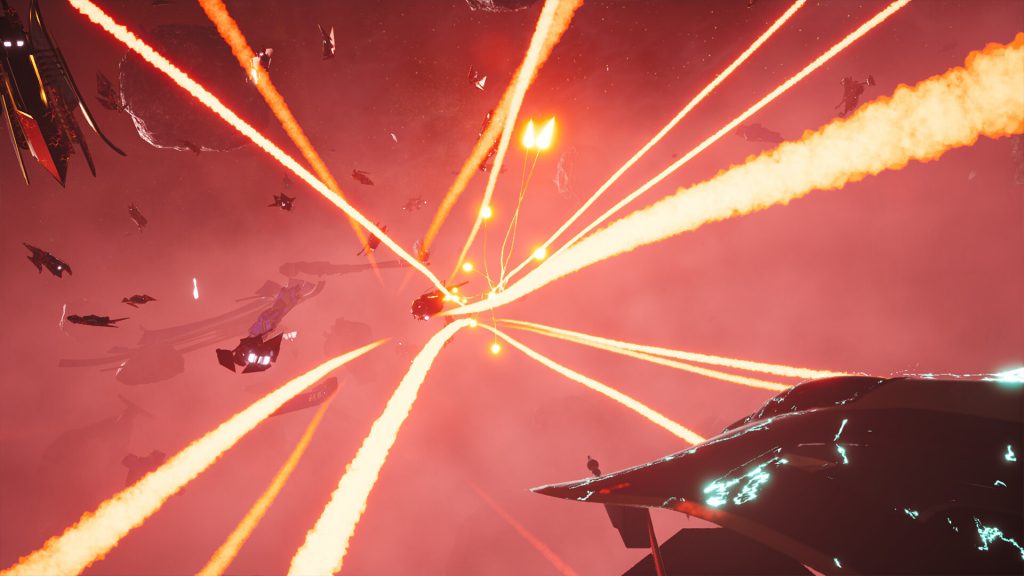
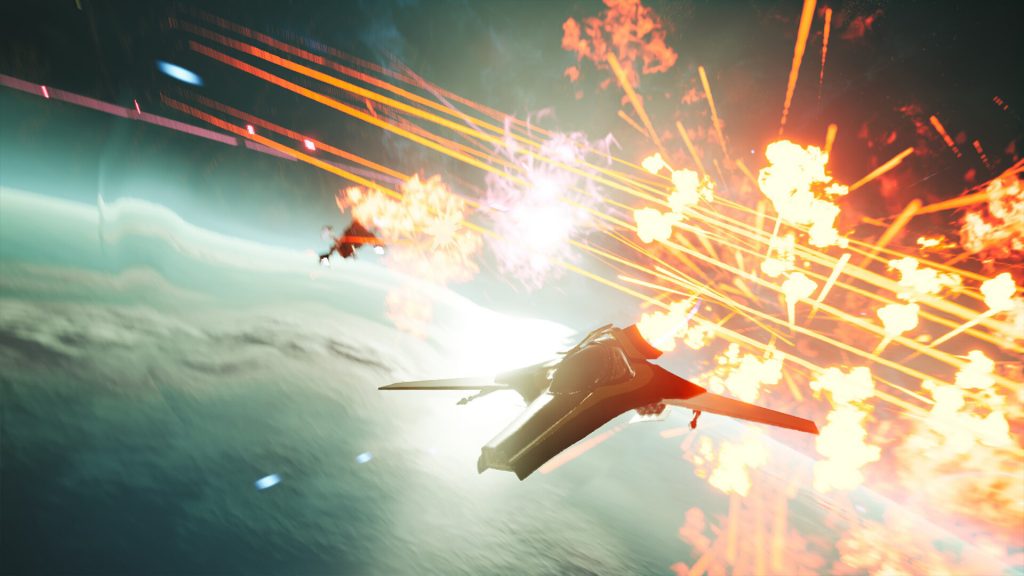
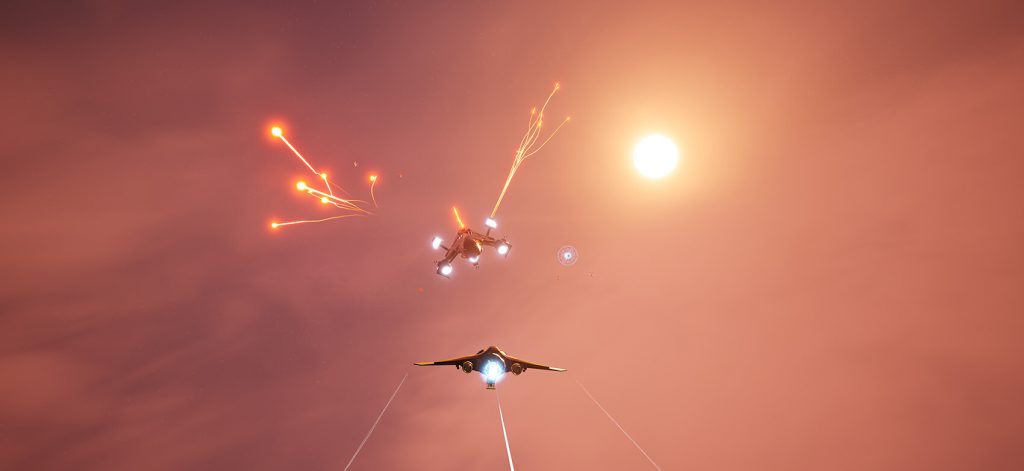
The comparison that GamingOnLinux reached for — “Star Fox meets Armored Core” — is the kind of shorthand that immediately communicates what Rogue Eclipse is doing and what players who want it should expect. Star Fox is an arcade space rail shooter with a specific kinetic personality: the sense of moving fast through three-dimensional space, enemy formations to read and respond to, and the satisfying clarity of space combat as a pattern game. Armored Core is the mech-customization layered atop that — the ability to shape your combat vehicle’s capabilities across runs. Together, these describe the specific product that HUSKRAFTS’ Husban Siddiqi has been building since the Epic MegaGrant and Creative England funding gave him the infrastructure to build it.
PC Gamer called it a “spiritual successor to Star Fox” — which is the same observation from a different angle. The Star Fox comparison keeps emerging because the game earns it in its fundamental feel, and because there simply aren’t many games doing what Rogue Eclipse is doing in this register.
The Arabesque Futurism Setting
“Arabesque Futurism” as a named aesthetic is the most specific creative declaration in the game’s pitch, and it’s worth engaging with directly. Arabesque design — the geometric and botanical pattern traditions that developed across Islamic art, architecture, and manuscript illumination — applied to a science fiction space opera context produces a visual identity that virtually no other game in the genre occupies. Western SF aesthetics pull from chrome modernism, retro-futurism, or military hardware. Japanese SF aesthetics pull from the traditions that produced the mecha genre. Arabesque Futurism is pulling from a third tradition that neither Western nor Japanese SF has consistently engaged with.
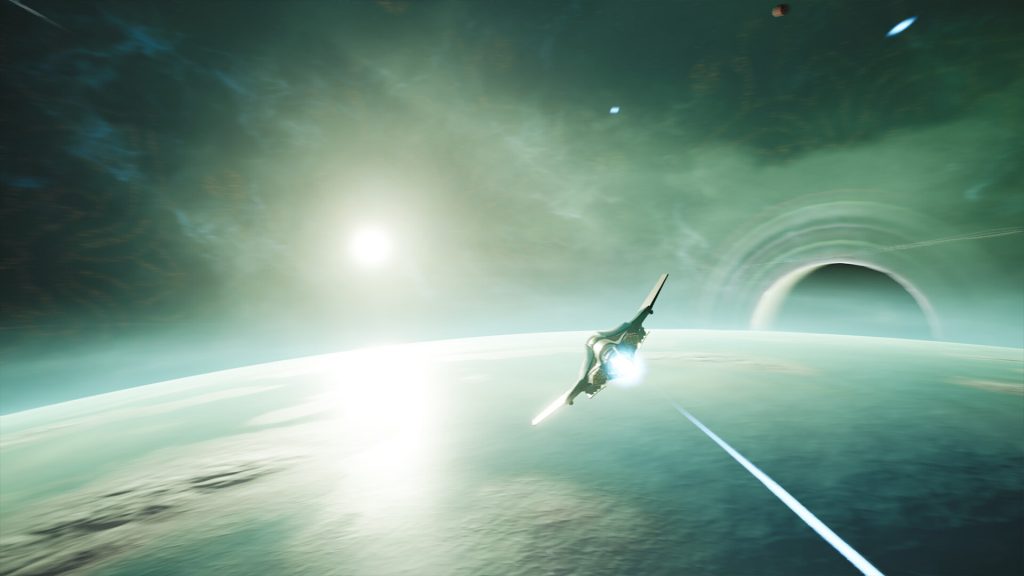
The practical visual result — geometric patterning, specific color sensibility, ornamental structures in space — creates an aesthetic coherence that makes Rogue Eclipse immediately recognizable in screenshots. Whether the execution fully realizes the ambitious aesthetic label is something the individual player will evaluate; that the game has a specific aesthetic identity beyond “space shooter visuals” is clear.
The Roguelite Loop
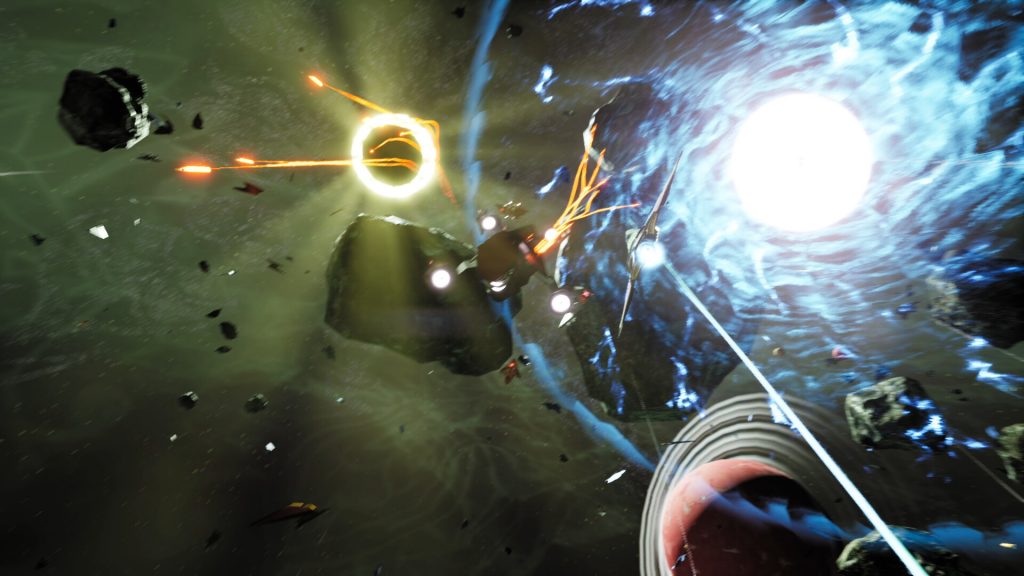
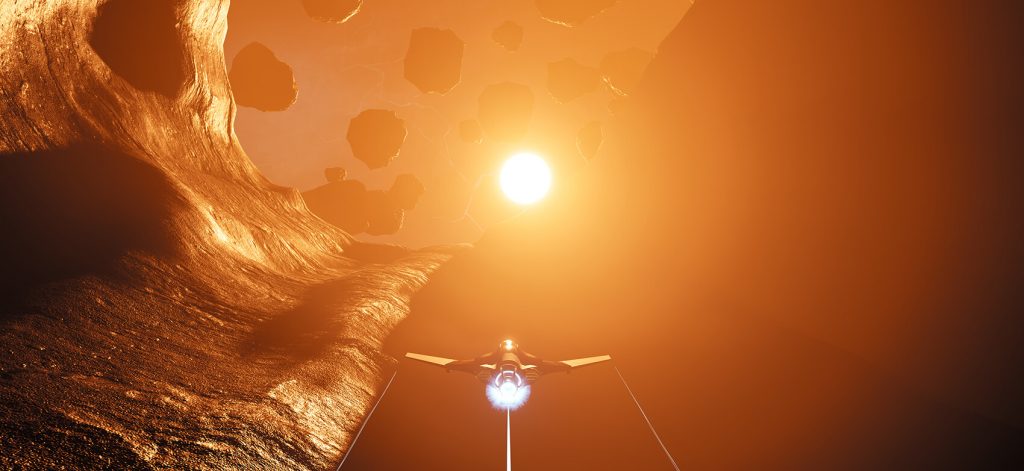
Multi-chapter roguelite campaign where each run encounters new enemies and dangerous environments — the standard architecture whose quality depends entirely on how well the specific content is designed. The Behemoth infiltration missions stand out as the design element that most distinguishes Rogue Eclipse from on-rails space shooters: penetrating the interior of a giant enemy vessel, navigating destructible terrain, advancing through internal geography. This converts the typical space shooter’s open-space combat into something closer to Star Fox‘s tunnel sequences — contained environments with structural features to navigate rather than open spatial combat.
Fighter upgrade and customization between runs is the progression system that gives repeated runs strategic variety beyond memory of enemy patterns. Different weapon configurations and capability upgrades make different approaches viable against the same enemies, sustaining the motivation to keep running after completing the campaign once.
The Mixed Steam Rating and Its Causes
63% positive from 47 reviews is a Mixed rating that the developer is actively responding to. The specific criticisms that have emerged are two: narrative direction that feels unclear, and repetitive voiced dialogue lines that appear too frequently. Both are solvable problems — the developer has already announced plans to make Chapter 1’s content variety accessible earlier, recognizing that the game’s full appeal may not communicate within the initial experience.
GAMESTIC’s positive assessment, alongside noting that “some notification sounds may be somewhat irritating,” is the category of criticism that polish patches typically address. The visual quality, soundtrack energy, and performance smoothness — all consistently praised — are the underlying game quality that the mixed reception is obscuring.
The 63% positive is the rating of a game whose fundamentals are sound and whose surface-level issues are creating launch friction. Husban Siddiqi’s public engagement with the community feedback signals the development commitment that converts Mixed launch ratings into improved post-patch ratings over time.
The Outersloth Connection
Innersloth’s Among Us achieved one of the pandemic era’s most remarkable viral gaming moments. Outersloth, Innersloth’s publishing label dedicated to supporting indie developers entering the market, provides Rogue Eclipse with the specific kind of institutional support that a solo British developer funded by grants couldn’t build independently. The alignment between Innersloth’s own origins as an indie developer and Outersloth’s mission to help other indie developers makes the publishing relationship feel appropriately specific rather than opportunistic.
Who Is This For
Strong fit for: Star Fox fans who have wanted the rail shooter’s kinetic energy in a more developed roguelite context; arcade space shooter enthusiasts who want the specific challenge of formation reading and fast response; players drawn to non-Western SF aesthetics in their games; Steam Deck players who want optimized handheld space combat; players willing to engage with a Mixed-rating launch whose developer is actively improving based on feedback.
Cautious fit for: players who want narrative clarity and strong story direction alongside the arcade action; anyone who finds repetitive voiced lines significantly disruptive to immersion; players who need the community consensus to improve before purchasing.
Less ideal for: players who dislike arcade-style challenge and prefer relaxed space exploration; anyone wanting multiplayer options; players seeking deep narrative RPG content within their space game.
The Takeaway
Rogue Eclipse is a British solo developer’s debut — funded by Epic, Creative England, and published by Innersloth’s own label — that earns the Star Fox comparison it’s been given and is contending with launch-state issues that the developer is publicly committed to fixing. The Arabesque Futurism aesthetic is genuine rather than surface decoration; the roguelite space combat is fast and purposeful; the Behemoth infiltration missions add the enclosed spatial dimension that the genre’s best entries use to break up the open-space combat rhythm.
The 63% Mixed rating reflects launch friction more than design failure. The developer’s active community engagement and the announced Chapter 1 improvements suggest the rating will move as those improvements ship.
$17.99 through August 28. Free demo available. The galaxy’s depths are being invaded. The cockpit is ready.
Information regarding ‘Rogue Eclipse’
| item | detail |
|---|---|
| Developer | HUSKRAFTS (Husban Siddiqi, solo developer) |
| Publisher | HUSKRAFTS, Outersloth |
| Genre | Roguelike, Arcade Space Shooter, Third-person Action |
| platform | PC (Steam) |
| Release date | August 14, 2026 |
| price | $19.99 (Launch special 10% discount, $17.99 until August 28) |
| demo | Free demo available (Released May 28, 2025) |
| Reactions/Evaluations | Steam ‘Mixed’ (63% positive of 47 user reviews) |
| Steam Page | Shortcut |