There’s a particular kind of space game that’s been quietly missing from the genre’s recent output: the one that treats space colonization as work rather than adventure. Not a survival sandbox, not a 4X conquest game, not a sci-fi action title — just the slow, technically grounded, deeply unglamorous business of keeping humans alive somewhere they shouldn’t be, while a corporate board on Earth demands quarterly results. Possible One: Lunar Industries, the new Early Access release from indie studio Upstairs Games, is precisely that kind of project. And in 2026, when most space games are reaching for either cosmic horror or cinematic action, the restraint is part of the appeal.
The game launched on May 22 on Steam Early Access, and the developer frames it as the first chapter in a broader vision exploring the industrialization of the solar system.
The Hard-Science Foundation
The most important thing to understand about Possible One is what isn’t in it. No sci-fi fantasy elements. No alien threats. No magical technology. The systems players manage — oxygen supply, radiation shielding, food production, power generation, infrastructure planning — are based on actual verified space technologies. The two-year crew rotation limit reflects real psychological and physiological research on long-duration spaceflight. The communication delays between the lunar base and Earth are real. The board pressure from terrestrial management isn’t satire — it’s exactly the kind of structural tension any actual commercial space operation would generate.
This commitment to scientific realism puts Possible One in a small but important lineage. Surviving Mars leaned toward this register but allowed itself sci-fi flourishes. Per Aspera committed harder to the science but in a different direction. Possible One sits in the rarest position: a colony management sim where the entire design philosophy is “what would actually happen, mechanically, if we tried to do this.”
That philosophy isn’t just a marketing claim — it’s structurally visible in how systems interact. Resource scarcity isn’t artificially imposed for game balance; it reflects actual constraints of lunar industrialization. Crew psychological management isn’t a personality system; it’s the management of real psychological strain produced by isolation, micro-gravity, and continuous high-stakes work. Board pressure isn’t a narrative device; it’s the operational reality of any private space venture.
For players who’ve ever wished space games would stop reaching for spectacle and start engaging with the actual difficulty of the problem, Possible One is built for you.
The Aesthetic of Function
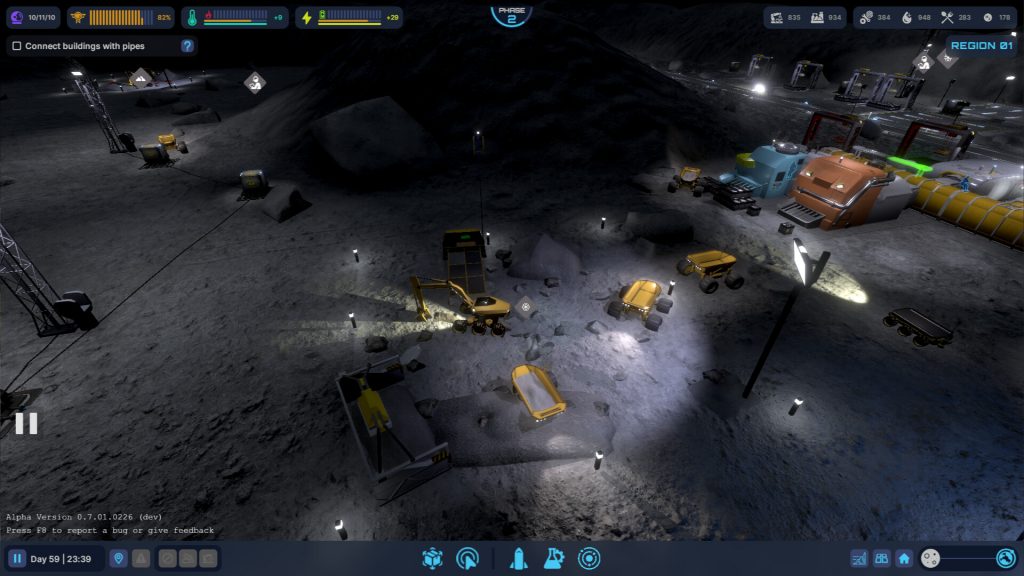
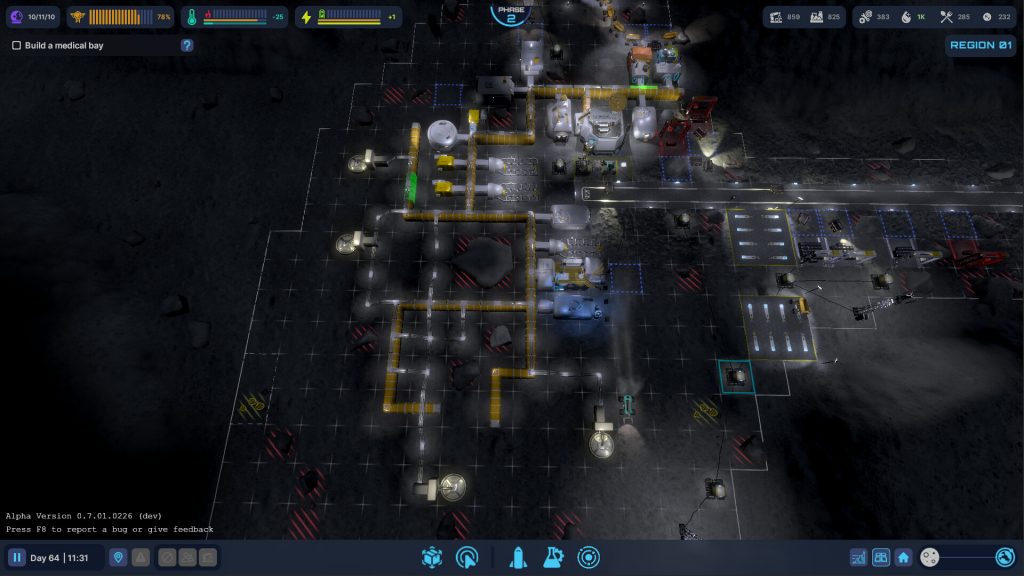
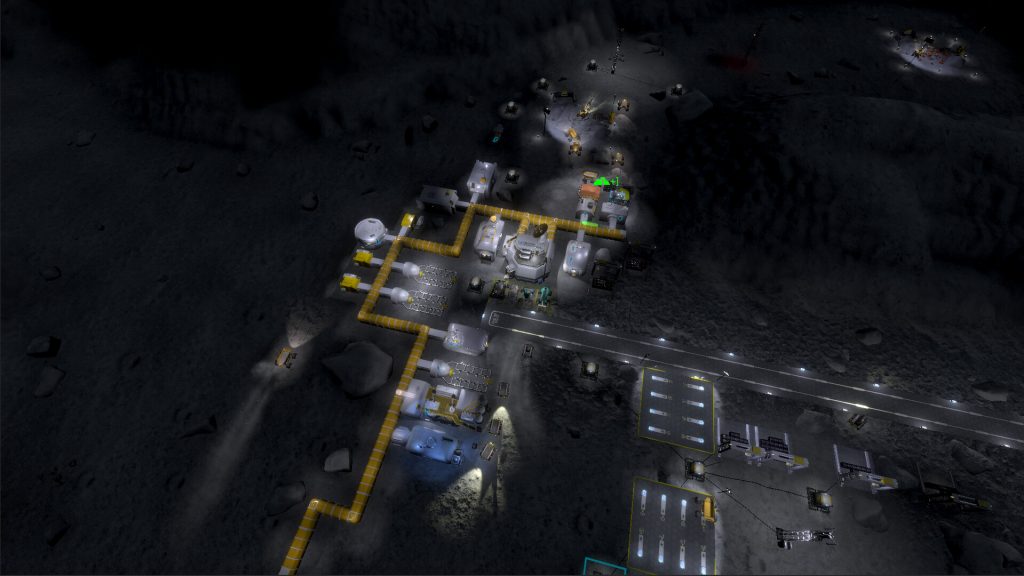
The visual register matches the design philosophy. Top-down 3D rendering. Limited color palette dominated by lunar regolith’s yellow-gray. Metal modules linking together across the surface in patterns determined by infrastructure logic rather than visual composition.
This isn’t aesthetic minimalism for stylistic reasons — it’s aesthetic minimalism because the actual lunar surface is minimal. The game’s visual language emphasizes functionality over flair, which sounds like it could be tedious but reads instead as honest. There’s something quietly compelling about watching a base expand across lunar terrain in patterns that look like they could actually be built, with modules placed where infrastructure dictates rather than where they’d photograph well.
The atmosphere this produces is unusual for a colony sim. Most management games trade in either cheerful productivity loops or anxious crisis management. Possible One operates in a third register: the calm, focused, slightly oppressive atmosphere of running a complex operation in a hostile environment, where things won’t immediately kill you but will kill you if you stop managing them carefully.
The audio design supports this register. Vacuum silence. Communication delays. The cold, demanding voice of board oversight transmitted from Earth. The game uses sound to extend the sense of isolation and operational pressure rather than to inject artificial drama into routine work.
The Board Pressure Problem
The single most interesting design element in Possible One is the corporate board pressure system. Players aren’t just managing a colony — they’re managing a colony for stakeholders who don’t care about the colony as a human achievement. They care about returns. They care about quarterly performance. They care about whether the lunar venture is justifying its costs.
This is the design choice that lifts Possible One from “lunar Banished” into something more pointed. Survival in this game isn’t the only success condition; it’s not even the primary success condition. You have to keep people alive and keep stakeholders satisfied, and those goals frequently work against each other. Investing in proper radiation shielding is expensive. Investing in crew welfare is expensive. Investing in research that won’t pay off for years is expensive. Doing things cheaply tends to kill people. The constant pressure of these tradeoffs is the actual game.
For a 2026 release, the resonance with the contemporary commercial space industry is unavoidable. The game isn’t making explicit political arguments, but the structural pressures it models are recognizable from real-world commercial space coverage. Anyone who’s followed the discourse around SpaceX, Blue Origin, or the broader commercial space sector will recognize the tensions Possible One dramatizes. Whether the game has anything to say about those tensions or whether it just models them faithfully is something the full release will reveal.
Outpost Networks and the Expansion Curve
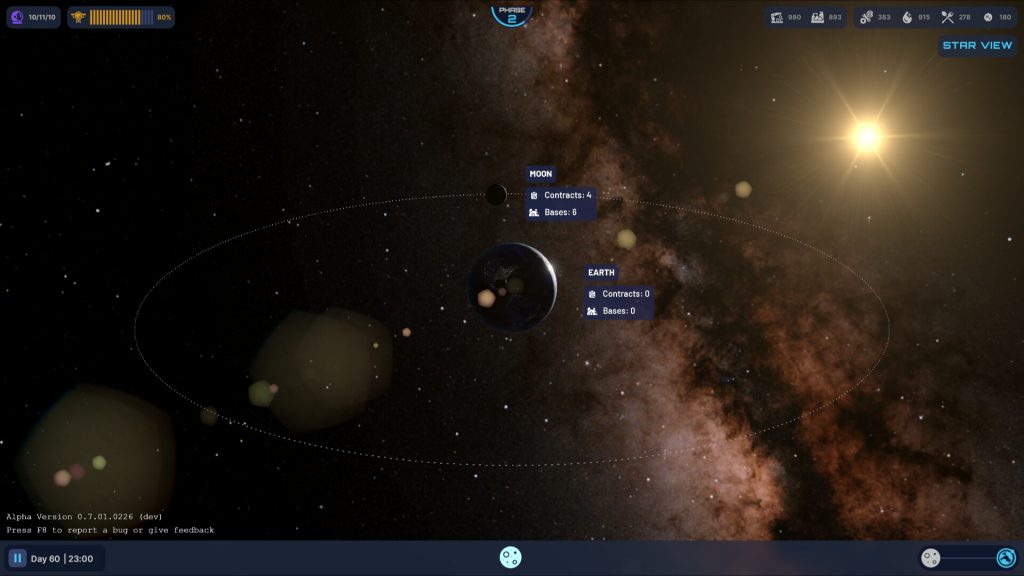
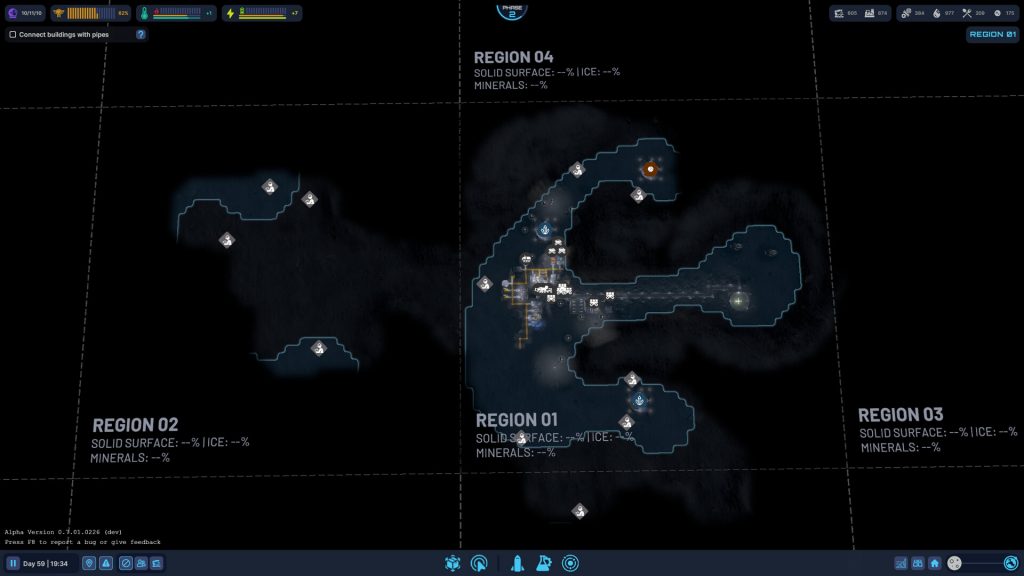
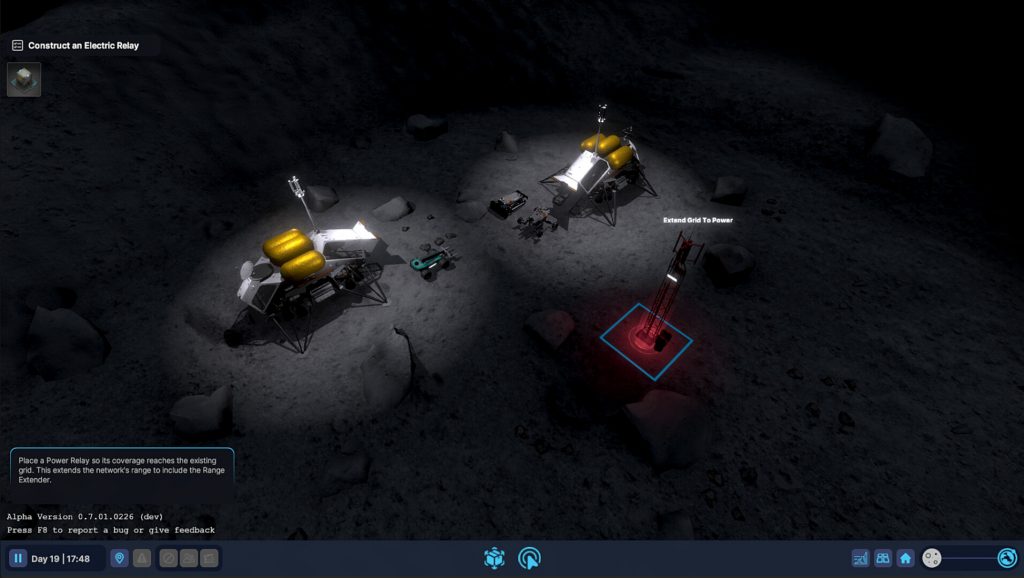
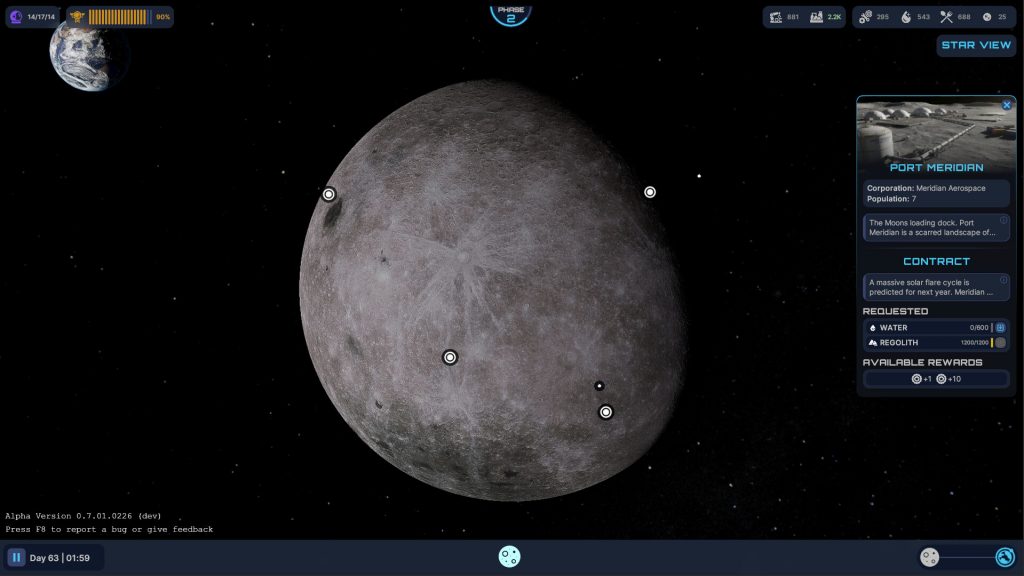
A recent update has expanded the game’s scope from single-base management to outpost networks across the lunar surface. This is a meaningful structural addition because it changes what kind of game Possible One is.
Single-base management is a tight, focused experience — you’re optimizing one location with finite expansion potential. Multi-outpost network management is a different scale entirely. Resource flows between locations, logistics for moving materials and personnel across the lunar surface, the decision of where to establish new outposts based on geological and operational factors — all of this expands the game from “operate a base” to “operate a lunar industrial network.”
The developer’s stated long-term vision — gradually reducing dependence on Earth — gives the expansion curve a clear thematic direction. You start as a fragile outpost reliant on terrestrial supply. You end (presumably) as a self-sustaining lunar industrial operation. That’s a real arc, and one that the multi-outpost expansion makes mechanically possible.
This kind of scope is unusual for Early Access. Many EA projects launch with a single core loop and gradually expand outward. Possible One appears to have started with a more expansive vision and is filling in the systems to support it across the development period. Whether the execution scales to match the ambition is the central question for the full release.

Crew Psychology and the Two-Year Rule
The two-year crew rotation limit deserves specific attention because it represents a kind of design honesty rare in colony sims. Real long-duration spaceflight produces measurable psychological and physiological effects. NASA’s research on the matter is extensive, and no actual lunar colony would operate without rotation systems.
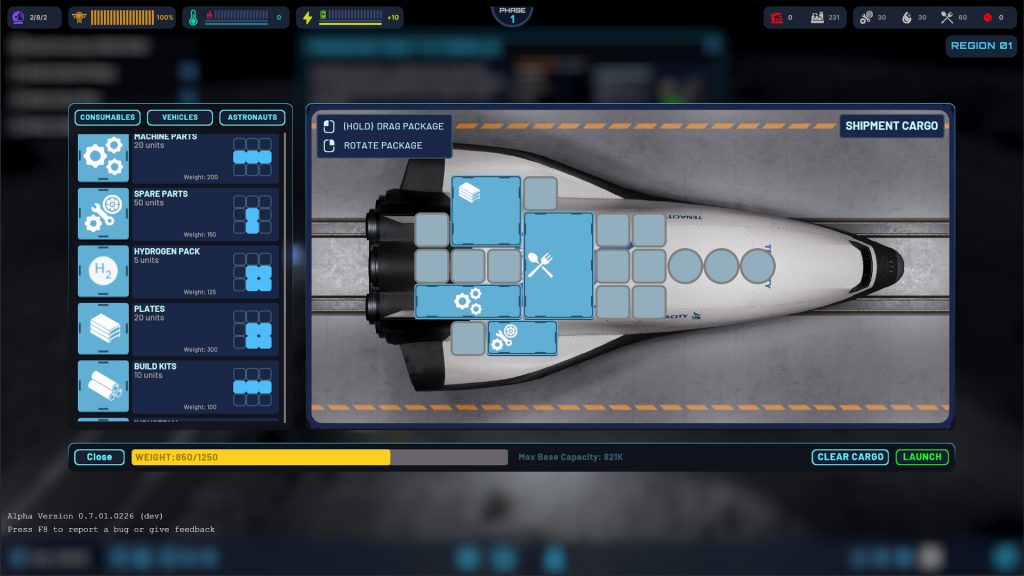
Possible One implements this constraint mechanically. Players have to manage crew shifts, plan for arrivals and departures, and absorb the operational disruption of personnel turnover. This isn’t a flavor system — it’s a real constraint that shapes infrastructure planning, training pipelines, and operational continuity.
The psychological state management layer adds further texture. Crew members aren’t interchangeable workers; they have mental states that affect performance and that respond to operational conditions. Push too hard and morale collapses. Provide too little stimulation and isolation effects compound. The management isn’t separate from the colony operations — it’s woven into them, because in any actual lunar operation, crew welfare is operational viability.
This is the kind of system that distinguishes Possible One from colony sims that treat human factors as cosmetic. The crew aren’t placeholders for player attention; they’re the colony’s primary operational dependency.
How the Press Has Read It
Coverage has been notably positive about the ambition and the realistic grounding. COGconnected, GameGrin, and Gamers Heroes have all covered the project, with the “ambitious and realistic vision of lunar colonization” framing emerging as a consistent thread. The press response suggests Possible One is being recognized for what it’s actually trying to do rather than being dismissed as too dry or unflashy for mainstream attention.
This is meaningful for the project’s commercial trajectory. Hard-science colony sims have a specific audience that’s been underserved by recent space game releases. Press attention from outlets that cover this register seriously helps surface the project to players who would be interested but might not encounter it otherwise.
A Studio With a Coherent Vision
Upstairs Games was founded in 2021 by developers sharing an interest in realistic, industrial space worlds. Possible One started as a small experimental project and evolved into the studio’s core vision. That development trajectory matters because it explains why the project’s design philosophy feels coherent rather than scattered — it grew organically from the team’s actual interests rather than being assembled from market analysis.
The trilogy framing is worth taking seriously, though also worth holding loosely. The developers have suggested that Possible One could be the first chapter in a broader exploration of solar system industrialization. If lunar colonization is chapter one, presumably Mars and asteroid mining are subsequent chapters. Whether the studio reaches those releases depends on the commercial trajectory of Possible One — successful Early Access leads to ambitious sequels; struggling Early Access ends visions before they fully unfold.
The community engagement during Early Access has been active. Recent patches have addressed research speed, construction resource refund balance, supply timing, and other detail-level system adjustments based on community feedback. This is the right developer posture for an ambitious EA project — responsive iteration on system-level details signals that the team is engaged with what’s actually happening in player experience rather than just defending design choices.
Who This Is For
Strong fit for: hard sci-fi enthusiasts who prefer plausible futures to fantastical ones; Surviving Mars / Per Aspera / Stationeers / Oxygen Not Included fans interested in a more grounded variation; players who enjoy commercial space industry as subject matter; management sim players who want their systems to model real tradeoffs rather than artificial gameplay constraints; anyone interested in the broader contemporary discourse around space industrialization.
Cautious fit for: colony sim players who prefer more vibrant aesthetics; players who specifically want narrative drama rather than systemic complexity; anyone who finds top-down isometric perspectives less engaging than first-person space games.
Less ideal for: players who want sci-fi spectacle, alien threats, or space combat; anyone allergic to corporate-pressure framings or who prefers purely utopian space colonization scenarios; players who avoid Early Access on principle.
What to Watch For
A few questions will shape Possible One‘s Early Access trajectory.
The first is whether the multi-outpost network expansion delivers genuine new gameplay depth or whether it scales the existing systems without fundamentally changing them. Network management is a meaningfully different design problem than single-base management, and successful execution requires more than just adding additional bases.
The second is the board pressure system’s narrative depth. The structural mechanic is in place; whether the writing and event design around board interactions produce genuinely memorable moments or stay at the level of mechanical pressure will determine whether the corporate-stakeholder element becomes a distinctive feature or just a difficulty modifier.
The third is content depth across a longer play. Hard-science colony sims need substantial system depth to support hundreds of hours of engagement, and Early Access launches typically have less content depth than full releases. How quickly Upstairs Games adds research depth, technology variety, scenario variety, and other long-tail content will determine whether the project sustains its initial audience.
The fourth is the studio’s ability to deliver on the broader vision. If possible, One succeeds, the planned trilogy becomes possible. If it struggles, the broader vision may not reach completion. Players investing in Early Access are partially investing in the studio’s longer arc, which is worth understanding going in.
The Verdict
Possible One: Lunar Industries is the kind of Early Access release that justifies the format. A small studio with a coherent vision, an unusual design philosophy, real technical ambition, and clear development direction is exactly what Early Access should be supporting. The hard-science commitment is the project’s strongest differentiator, and the board pressure system gives the management loop a kind of structural tension that purely engineering-focused colony sims rarely achieve.
There’s real friction in the current build — Early Access content scope, balance adjustments still in progress, system depth that needs to grow significantly to support the project’s ambitions. Players who want polished launch experiences should wait. Players who want to support a project finding its full shape will find a genuinely interesting foundation here.
For the management sim and hard sci-fi audiences, this is one to engage with now. For broader audiences, it’s worth watching across the development period.
Early Access Verdict: Cautiously recommend for the right audience One of the more genuinely ambitious colony sims of recent memory, executing on a hard-science vision that the genre has been missing. The Early Access build is a foundation rather than a finished experience, but the foundation is solid enough to support the studio’s broader trilogy ambitions if development continues on this trajectory.
The moon is hostile. The board is demanding. Your crew has two years before they need to go home. Welcome to humanity’s next industrial revolution — which, Possible One suggests, will look less like Interstellar and more like a very difficult spreadsheet.
Information regarding Possible One: Lunar Industries
| item | detail |
|---|---|
| Developer / Publisher | Upstairs Games (founded in 2021) |
| Genre | Moon Colony Management Simulation / City Builder / Space Strategy / Resource Management |
| Release platform | PC (Steam Early Access) |
| Release date | May 22, 2026 (Early Access) |
| Point of view | Top-down 3D |
| core system | Oxygen, Radiation, Food, and Power Management / Board Satisfaction / Outpost Network / Research Tree |
| characteristic | Based on actual, verified space technology / No sci-fi or fantasy elements / Crew rotation limit of 2 years |
| Series Vision | Hint of the first chapter of the Solar System Industrialization Exploration Trilogy |
| Main Keywords | Moon, Colony, Management, Real Science, Survival, Industrialization, Board of Directors, Resource Management |
| Official Channel | Discord · X · Instagram · Reddit · TikTok · YouTube · Facebook |
| Steam Page | Shortcut |