The project’s origins clarify what it is: a 902% Tumblbuk campaign from 777 backers who wanted a game featuring their favorite virtual creators, followed by a demo that 8,618 players downloaded and found engaging enough to sustain 85 daily active users seven weeks after release. Maid Cafe Simulator has a fanbase that predates the game itself — which is how VTuber IP games work when they work.
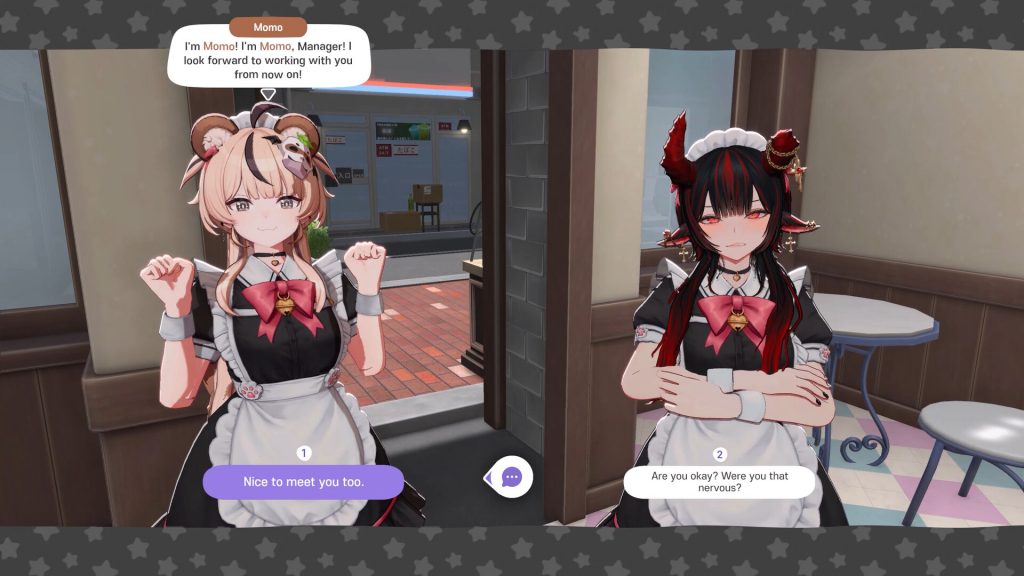
Korean indie studio Accelix (previously released Zoom in Love, a campus romance visual novel developed in collaboration with VTuber Terinunna on STOVE) has partnered with media-tech company SCON to build the first Korean indie Full 3D simulation game based on VTuber IP. Five of SCON’s virtual creators — Iomong, Bukuki, Minyeongi, Jegal Geumja, and Mogugu — are implemented as playable kemonomimi (animal-ear humanoid) maid characters, with their original personalities, worldbuilding, and creative identities translated into 3D interactive form.
October is the Steam launch target.
The Day-Night Structure
The game centers on two distinct modes that the maid cafe premise naturally supports.
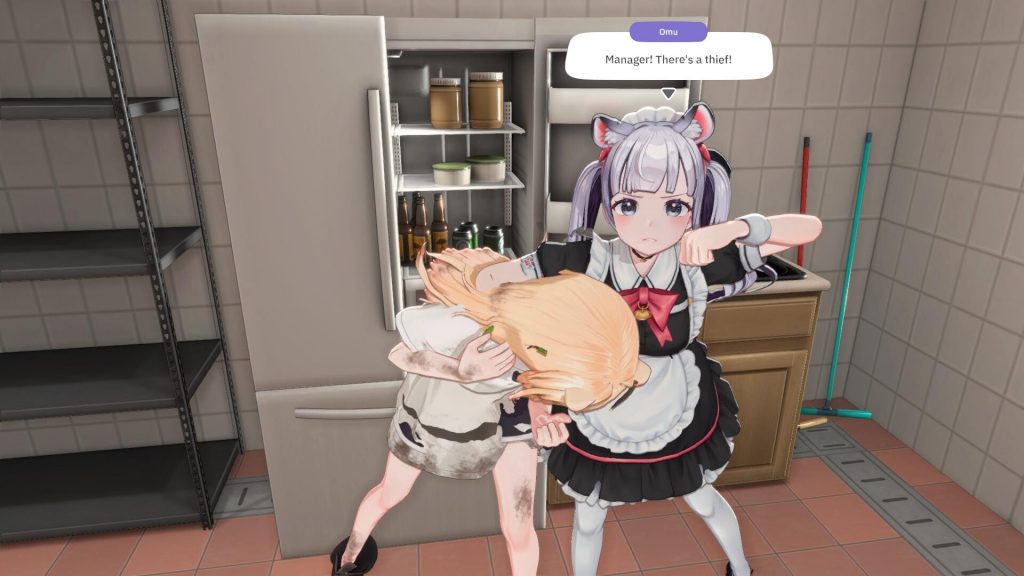
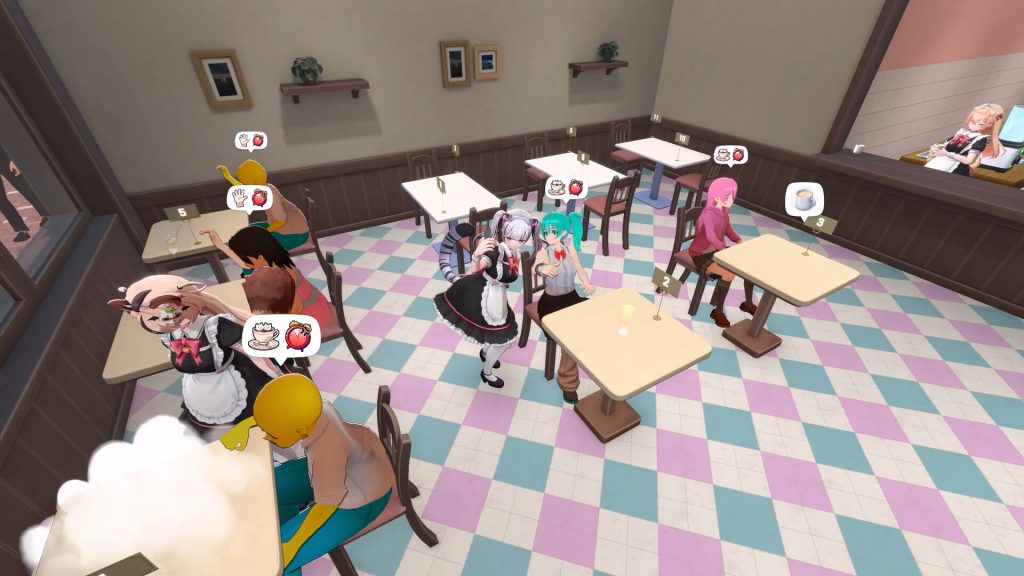
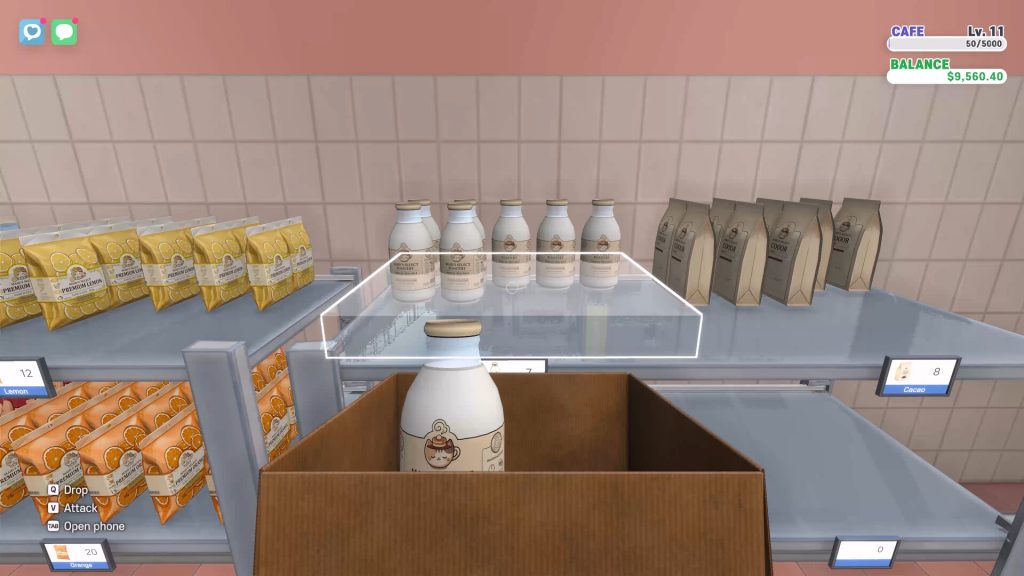
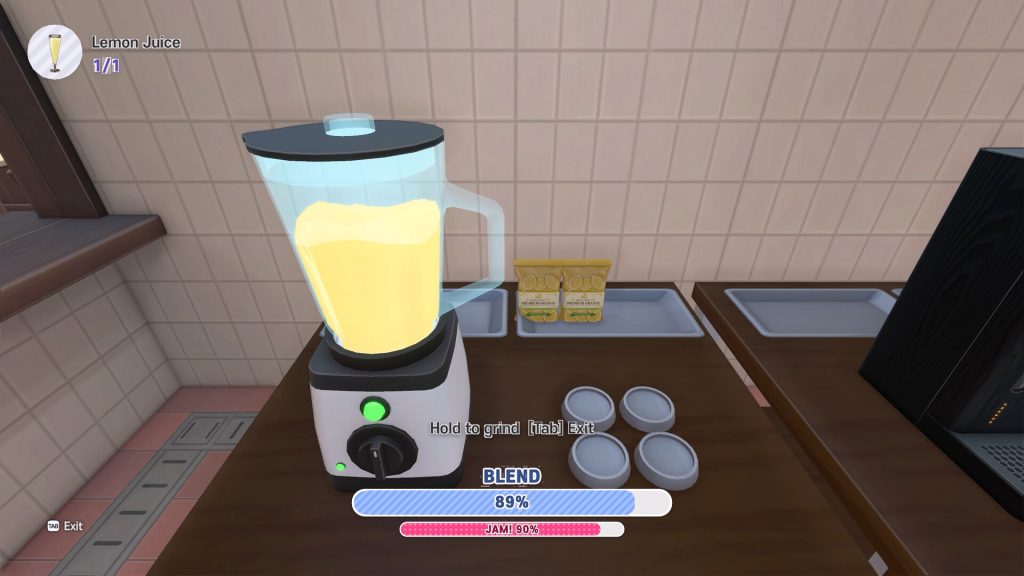
Daytime is cafe operations: taking orders, cooking, serving, managing inventory, expanding the cafe, handling difficult customers, responding to rival cafe interference, and navigating unexpected incidents. The path toward the legendary “MaidChelin 3-Star” status requires managing all of this while protecting the maids from whatever the antagonist forces the narrative to produce. Minigames, recipe development, maid costume collection, cafe expansion, and the automation partner “Maidroid” provide the depth layers that extend management beyond routine service.
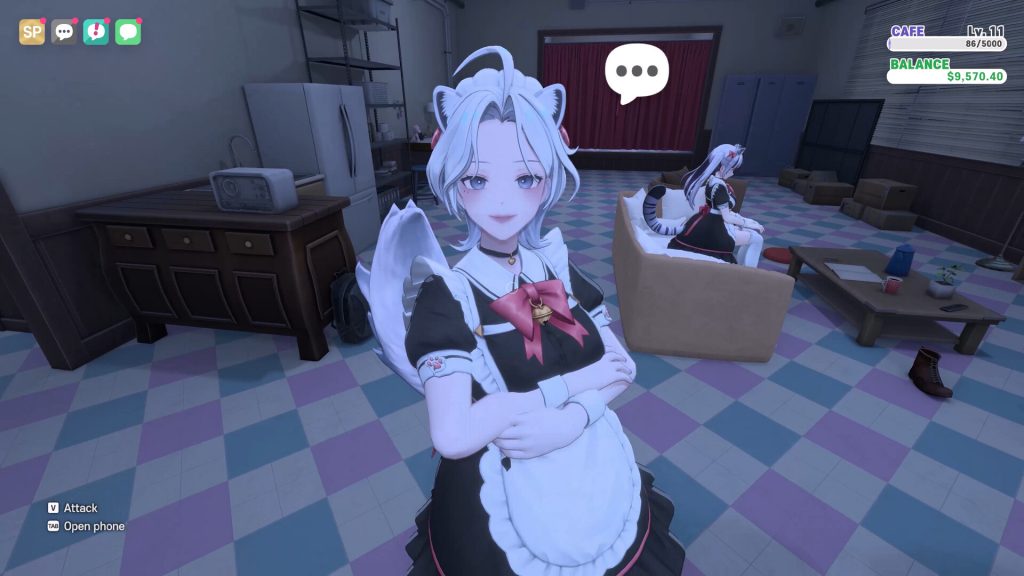
Nighttime is relationship-building: after closing, the maids become conversation partners whose individual stories and hidden lore are unlocked through sustained interaction. Each character’s VTuber origin — the specific creative persona that their streaming audiences know — is the foundation for the nighttime story content. The player who runs a good cafe by day earns access to character-specific narratives by night.
This structure is the correct implementation for a VTuber-based game because it parallels the actual experience of following VTubers: the public-facing content (the daytime cafe performance) and the more personal connection (the nighttime conversation) mirror the relationship between a VTuber’s public broadcasts and the community bonds that dedicated fans form.
The Kemonomimi Design Choice
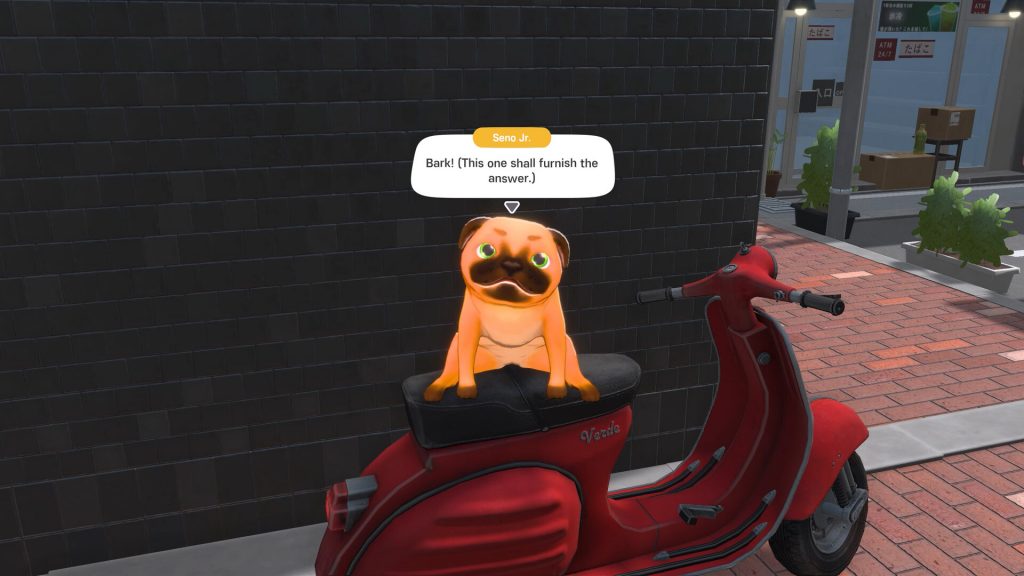
The animal-ear humanoid maid design is a specific aesthetic decision that sits at the intersection of multiple fanbase preferences: the maid cafe genre’s appeal, anime kemonomimi character conventions, and the fantasy framing that lets each character’s animal characteristics express their personality rather than just decorate it. Iomong’s animal traits influence her behavior patterns; Bukuki’s influence hers differently. The design is doing character work rather than only aesthetic work.
The Full 3D implementation — described as a first for Korean indie games built on VTuber IP — provides the spatial interaction that 2D visual novel implementations don’t. Being in the cafe space with 3D character models changes the relationship between the player’s presence and the characters’ presence from a viewer-content relationship to a shared-space relationship, which is appropriate for a game about running a cafe with the maids rather than watching them.
The Accelix-SCON Partnership Model
The division of responsibility between Accelix (game development and systems) and SCON (VTuber IP and fanbase amplification) is the operational structure that makes VTuber IP games viable for indie studios. An indie team developing for an existing fanbase they didn’t create faces the challenge of correctly representing the IP while building technically sound game systems. Splitting the responsibilities means each partner contributes their domain expertise: Accelix understands how to build cafe management systems and visual novel narrative flow; SCON understands how to represent their virtual creators authentically and how to reach the audiences who care about them.
The result, if executed well, is a game that VTuber fans trust because the IP partner is involved, and that plays well because the game development partner knows what they’re doing. The 902% Tumblbuk funding suggests the fanbase trusts the project before the game exists in final form; the demo’s sustained engagement suggests the game systems are delivering on that trust.

The Market Validation Trail
December 2025 Tumblbuk: 902% funding from 777 backers. June 2026 Steam demo: 8,618 downloads, median 59-minute playtime, 85 daily active users at seven weeks. 17,000 wishlists accumulated. Overall Positive rating on the demo.
This is a specific pattern: genuine pre-existing demand confirmed through crowdfunding, followed by a demo that converted a portion of that demand into experienced players who found the actual gameplay worth engaging with, followed by sustained daily engagement well past the initial demo curiosity period. The 85 daily active users seven weeks after the demo launch is the number that indicates genuine replay rather than one-time curiosity — players returning to the demo rather than completing it once and moving on.
Who This Is For
Strong fit for: fans of the five SCON VTubers (Iomong, Bukuki, Minyeongi, Jegal Geumja, Mogugu) who want interactive engagement with the IP beyond streaming content; cafe management simulation enthusiasts who want the genre combined with visual novel character relationships; kemonomimi and maid aesthetic enthusiasts who want the combination in a 3D interactive format; players who supported the Tumblbuk campaign and want the full game; Korean indie game supporters tracking the VTuber-game collaboration space.
Cautious fit for: cafe management players who specifically want the genre without the visual novel relationship layer; players who don’t follow the SCON VTubers and want to evaluate the game purely on its mechanical merits; anyone who needs the October release date confirmed to a specific day before following.
Less ideal for: players who dislike simulation or visual novel mechanics; anyone wanting action or competitive content; players who need Korean-language-only content localized to other languages (only Korean confirmed with the demo).
The Takeaway
Maid Cafe Simulator is the first Korean indie Full 3D VTuber IP simulation game — a category that didn’t exist before Accelix and SCON’s partnership produced it. The commercial validation trail is unusually clear for a pre-release game: crowdfunding at 902%, demo engagement sustained seven weeks post-release, 17,000 wishlists. The fanbase came first; the game is being built into that existing community’s appetite for it.
October on Steam. The maids are waiting. The daytime cafe needs running. And the nighttime stories behind each kemonomimi character are locked until you’ve earned the maids’ trust through how you manage the cafe around them.
Information regarding ‘Maid Cafe Simulator ‘
| item | detail |
|---|---|
| Developer | Accelix (South Korea) |
| Publisher | Accelix (IP & marketing collaboration with SCON) |
| Genre | Cafe Management Simulation, Visual Novel, Life Simulation |
| platform | PC (Steam) |
| Release date | Target October 2026 (Official Release) |
| etc | Five VTubers from SCON (Iomong, Bukuki, Minyeongi, Jegal Geumja, and Mogugu) appear as characters. |
| result | Achieved 902% of Tumblbug funding; 8,618 demo downloads, approximately 17,000 wishlist items |
| Reactions/Evaluations | Steam Demos Overall ‘Positive’ (46), Recent ‘Very Positive’ (13); Reported by numerous domestic media outlets |
| Steam Page | Shortcut |